
Clean warehouses.
Safe operations.
Specialised warehouse and industrial cleaning across Sydney — keeping your facility compliant, organised, and safe for staff and inventory.
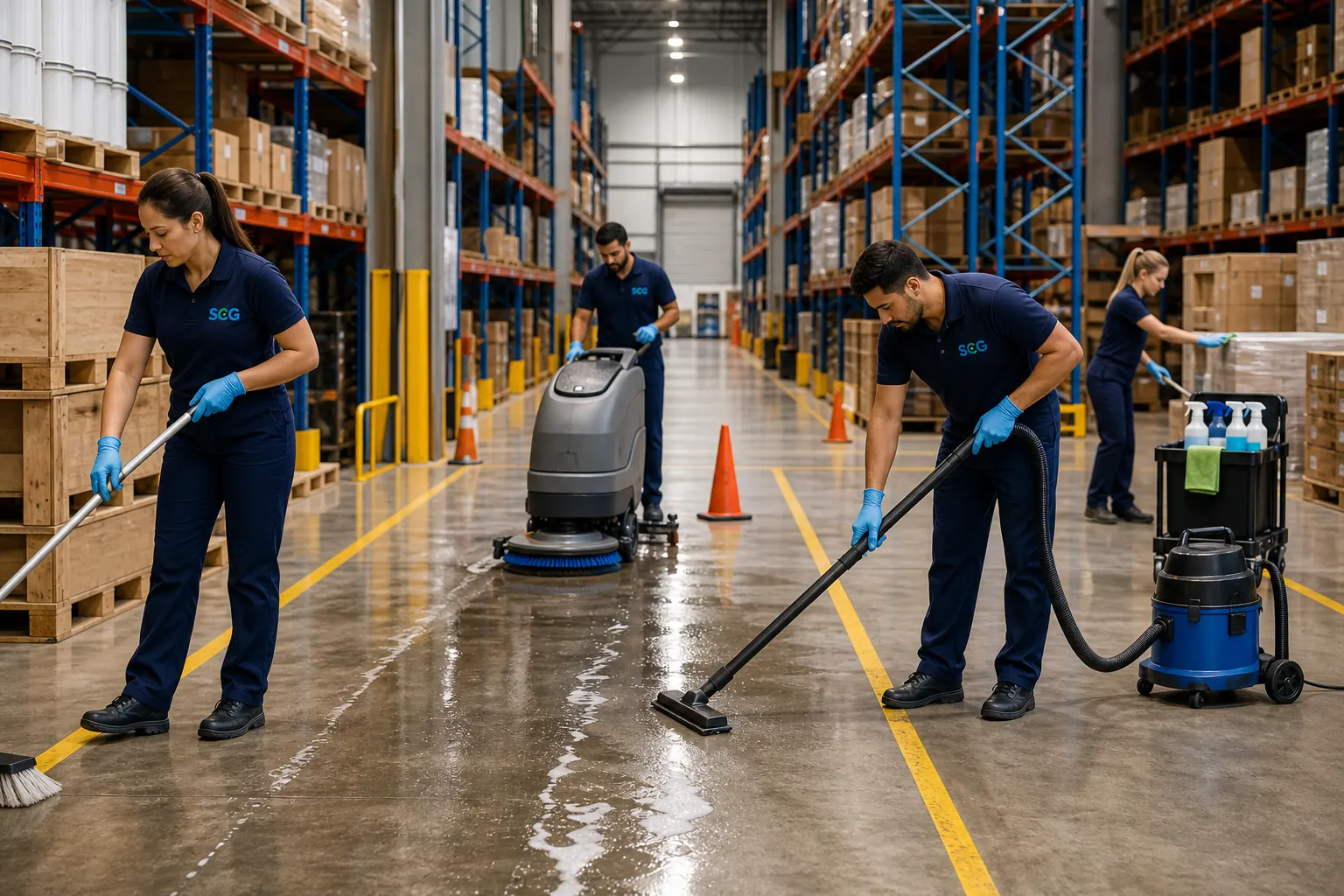
Warehouse Cleaning Services by Sydney Clean Group
Warehouse cleaning is critical in ensuring the operational efficiency, safety, and compliance of storage and distribution facilities. Given the unique challenges posed by such spaces — including high-traffic areas, sizeable square footage, and industrial equipment — it's vital to have a professional cleaning service that specialises in handling these environments.
Maintaining a clean warehouse is essential not just for operational efficiency but also for the health and safety of your staff and the preservation of your inventory.
Investing in a professional warehouse cleaning service ensures that your facility meets industry standards and regulations, supports worker productivity, and presents a professional image to business partners and regulators.
Manufacturing plants, workshops and process facilities are covered under industrial cleaning in Sydney, which runs on the same out-of-hours model.
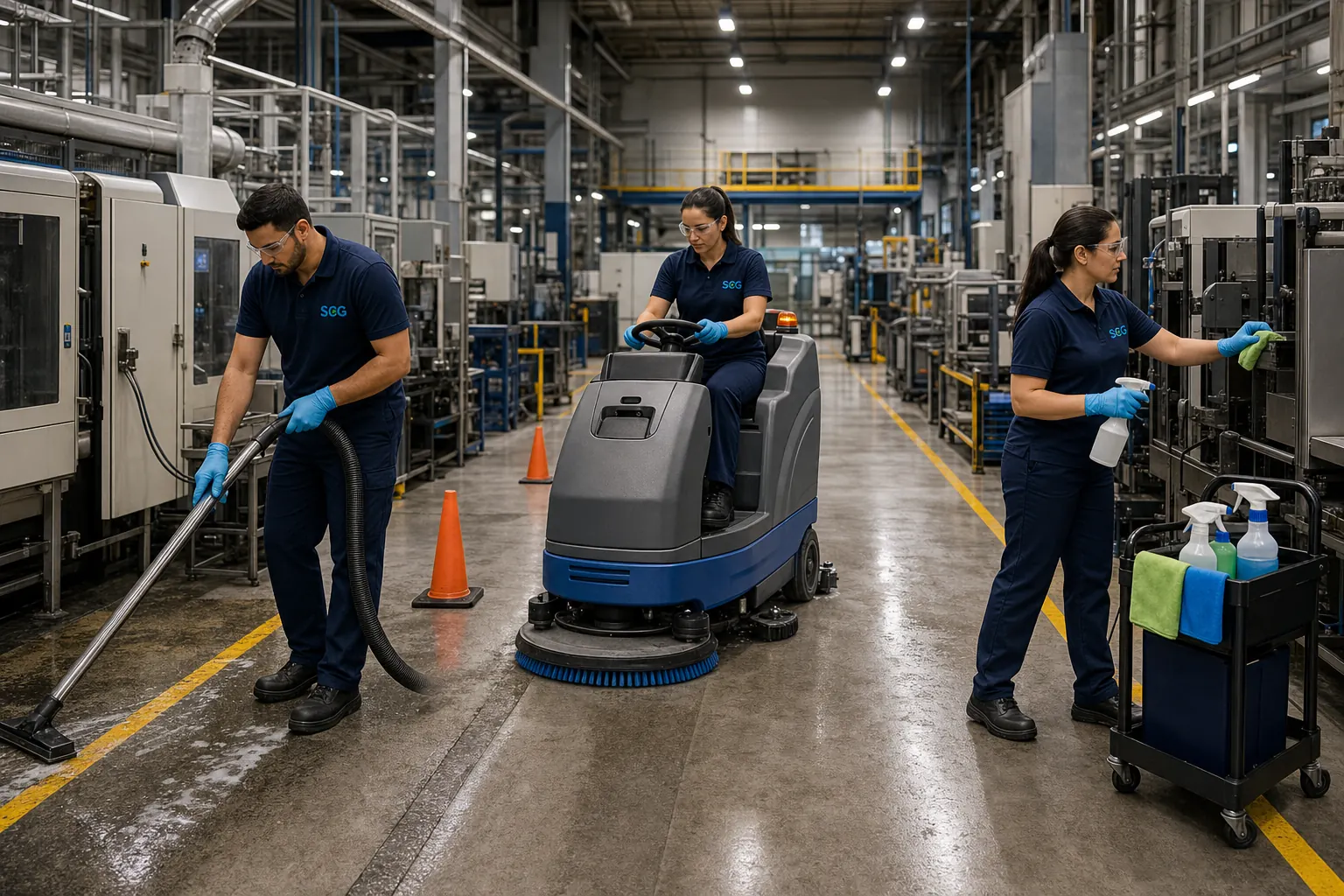
Every area of your warehouse.
Floor Cleaning & Maintenance
Robust cleaning solutions for warehouse floors — scrubbing, sealing, and application of epoxy coatings to protect and maintain flooring under heavy machinery traffic.
High Dusting
Removing dust from high areas such as shelves, rafters, and light fixtures — preventing health hazards and product contamination.
Ventilation Cleaning
Ensuring that HVAC systems and exhausts are free from dust and debris to maintain air quality and proper ventilation throughout the facility.
Waste Management
Proper disposal of industrial waste and regular sanitisation of waste disposal areas to prevent pest infestations and maintain hygienic conditions.
Customised Service Plans
Cleaning schedules tailored to your operational requirements — with minimal disruption to daily activities using advanced cleaning technologies.
Emergency Clean-ups
Rapid-response cleaning for spills, incidents, and urgent situations — keeping your operations running with minimal downtime.
Why warehouses trust us.
Safety Compliance
Keeping warehouses clean helps comply with health and safety regulations, reducing the risk of accidents caused by slips, trips, and falls.
Inventory Protection
Clean environments prevent the accumulation of dust and dirt on stored products, ensuring goods remain in the best possible condition.
Pest Control
Regular cleaning reduces the risk of pest infestations, which can damage goods and compromise the structural integrity of your facility.
Efficiency & Morale
Clean and organised warehouses boost worker morale and increase productivity by creating a more pleasant and efficient working environment.
Industrial floor scrubbing: machines, method and coverage
The floor is the whole job in a warehouse. It is the largest surface, it is what auditors and visiting clients look at first, and it is where the site's slip risk sits. Sweeping alone moves grit; it does not remove the film of dust, tyre rubber and product residue that builds up on sealed concrete.
Ride-on scrubbers handle open floor, cross aisles and dispatch areas at pace, laying down solution, scrubbing and recovering it in a single pass so the surface is walkable almost immediately. Walk-behind machines take narrow aisles, dock aprons and the space around racking legs where a ride-on cannot turn.
Edges and corners still need manual work. Debris collects against racking uprights, under bottom beams and along walls, and no machine reaches any of it. A scope that specifies machine coverage without naming edge detail will leave a visible perimeter of dirt framing an otherwise clean floor.
Racking, beams and high-level dusting
Racking collects dust on every horizontal surface: beam tops, upright braces, pallet edges, sprinkler pipework, light fittings and roof structure. In a busy facility the source is constant — forklift movement, pallet handling, cardboard and shrink wrap all shed particulate into the air.
Left alone that dust becomes three problems at once. It falls onto stored product, which matters most in food, pharmaceutical and electronics storage. It adds fire load in the roof space. And it will fail a client or compliance audit on appearance alone.
High-level work is done from an elevated work platform with the aisle isolated, working top down so nothing lands on surfaces already cleaned. It has to be scheduled — quarterly suits most dry-goods sites, more often where product contamination is a live risk — and it needs the aisle out of service for the duration, which is why it usually runs outside picking hours.
Loading docks, mezzanines and the areas that get skipped
Loading docks are the dirtiest part of most facilities and the most frequently under-scoped. They take weather, truck tyre marks, hydraulic and diesel residue, pallet debris and strapping, and everything that comes off a trailer floor. Dock levellers, pit areas and the apron immediately outside need attention on the same cycle as the internal floor, not less often.
Mezzanines, stairs and walkways are the second gap. Stair treads and handrails are touched constantly, mesh mezzanine floors trap dust that drops through onto whatever sits below, and edge protection and safety rails are rarely wiped by anyone at all.
Then there are the amenity areas: lunch rooms, toilets, locker areas, first aid rooms and the office attached to the facility. Staff judge the entire cleaning contract by these rooms even though they are a fraction of the floor area, so they belong in the scope with a stated daily frequency.
Dust control, WHS and slip risk
Slips, trips and falls dominate warehouse incident statistics, and most of the causes are cleaning problems: a dust film that makes sealed concrete slick, hydraulic or oil spotting under equipment, water tracked in through open dock doors on a wet day, and packaging debris left in aisles.
Mechanical scrubbing addresses the first directly, because it removes the film rather than spreading it around. A scheduled service addresses the rest by making sure debris removal happens on a cycle instead of after someone falls. Spill response should be a named part of the arrangement with a stated attendance expectation.
Airborne dust is the other work health and safety dimension. Dust generated by forklift traffic and pallet handling is breathed by staff all shift, settles on stock, and adds fire load in the roof structure. Floor scrubbing and scheduled high-level dusting are the two controls that actually reduce it.
Working around picking shifts and forklift traffic
Very few Sydney warehouses can stop for a clean. The scope has to fit the shift pattern instead: after dispatch closes, in the gap between shifts, on a weekend, or on a rolling zone basis while the site keeps working.
Where cleaning and operations run at the same time, the mechanics are traffic management. Exclusion zones and signage go up before a machine moves, the crew works with the pick path rather than across it, and the shift supervisor knows which aisle is out and for how long. Cleaning staff working near forklift traffic need site induction and high-visibility gear as a baseline.
Scheduling also protects the work itself. There is no value in scrubbing a dispatch area an hour before the busiest inbound window of the week. Sequencing the scope against the site's actual rhythm is what separates a floor that looks clean once from one that stays clean.
Cold storage, dry goods and how a warehouse quote is built
Cold storage and ambient dry goods are two different cleaning problems inside one building. In a cold room water freezes, standard products lose effectiveness at low temperature, and crews need appropriate PPE and rotation limits. Work is staged around stock movement and defrost cycles, and the method leans on controlled moisture and low-temperature chemistry.
Ambient areas are governed by traffic and product instead. A high-throughput third-party logistics facility with constant forklift movement generates far more floor soil and airborne dust than a slow-moving bulk storage site of the same footprint, and prices accordingly.
A warehouse quote is built from measured floor area split by type, the ratio of open floor to narrow aisle, dock door count, mezzanine and amenity areas, access hours, and the periodic programme. Sydney Clean Group quotes after a site walk so those numbers are measured rather than estimated — call 02 9139 8401 or request a free quote.
Warehouse Cleaning — FAQs.
What does a warehouse cleaning service include?
A standard scope covers the floor — sweeping and scrubbing of aisles, pick faces and open areas — plus loading docks and dock levellers, mezzanines and stairs, racking and high-level dusting on a periodic cycle, amenities and lunch rooms, any office attached to the facility, and waste and bin areas. Line marking, epoxy sealing and pressure washing of external hardstand are usually separate periodic items.
How are large warehouse floors cleaned?
Ride-on and walk-behind scrubbers do the volume work. A ride-on machine covers open floor and wide aisles quickly and leaves the surface dry enough to walk on almost immediately; walk-behind units handle narrow aisles, dock areas and the space around racking legs. Edges, corners and under-racking are finished manually, because that is where dust and debris actually accumulate.
Can cleaning be done without stopping picking and dispatch?
Usually yes. Most warehouse cleaning is scheduled around shift patterns — after dispatch closes, between shifts, or on weekends — and the floor is worked zone by zone so no aisle is blocked for long. Where a site runs continuously, the crew coordinates with the shift supervisor and moves with the pick path rather than against it. Traffic management and exclusion zones are set before any machine starts.
How often does racking need high-level dusting?
It depends on what the site stores and moves. A dry-goods facility with heavy forklift traffic generates enough airborne dust to justify a quarterly cycle; food, pharmaceutical and electronics storage often need it more frequently. Beam and upright dust is a contamination and fire-load issue as well as an appearance one, so it belongs on a scheduled cycle rather than being done when somebody notices it.
How does warehouse cleaning help with WHS and slip risk?
Most warehouse incidents involve slips, trips and falls, and most of those trace back to floor condition: dust film, oil and hydraulic spotting, water tracked in through docks, and shrink wrap or strapping left in aisles. Regular mechanical scrubbing removes the film that makes sealed concrete slippery, and a scheduled service means debris is cleared on a cycle rather than after an incident.
Do you clean cold storage areas?
Cold storage needs a different method to ambient areas. Water use has to be controlled because it freezes, products have to work at low temperature, and the crew needs the right PPE and rotation. Work is usually staged around stock movement and defrost cycles. Ambient dry-goods areas and cold rooms should be scoped separately rather than priced as one continuous floor area.
How is warehouse cleaning quoted?
Quotes are built from floor area, how much of it is open versus narrow-aisle racking, the number of dock doors, mezzanine and amenity areas, and the service frequency. Access hours matter — a site that can only be cleaned overnight prices differently to one with a weekend window. Periodic work such as high-level dusting and external pressure washing is listed separately so it can be compared.
Related industrial and logistics cleaning.
Suburb coverage for distribution and storage facilities.
Plants, workshops and process facilities across Sydney.
Handover cleans for new and expanded industrial sites.
Attached offices, amenities and staff areas under one contract.
Get Started Today
Contact us today to schedule a free consultation and discover how our cleaning services can benefit you. Let us handle the cleaning so you can focus on what matters most.