
Pristine common areas.
Happy residents.
Professional strata cleaning that keeps common areas spotless, welcoming, and safe — maintaining property values and resident satisfaction across Sydney.
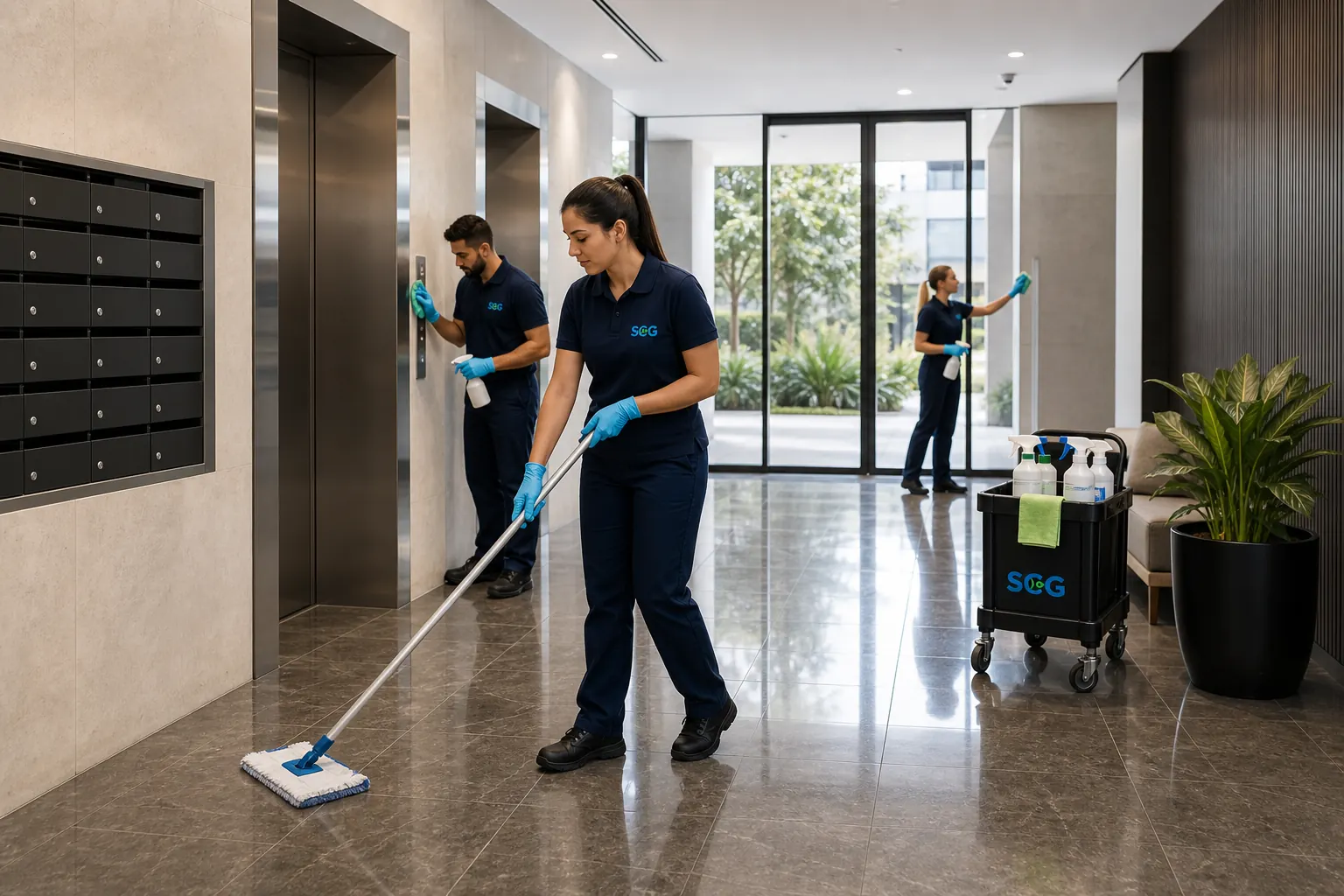
Strata Cleaning Services by Sydney Clean Group
Strata cleaning is essential for maintaining the cleanliness, appeal, and safety of multi-tenant residential and commercial properties. Well-maintained common areas directly influence property values and resident satisfaction.
Sydney Clean Group specialises in bespoke cleaning solutions for strata-managed properties across Sydney — ensuring pristine lobbies, hallways, car parks, and shared spaces that make residents proud of where they live.
We work closely with strata managers and owners corporations to deliver tailored cleaning schedules that meet your property's specific requirements and budget.
If you are looking for suburb-by-suburb coverage rather than an explanation of the service, see strata cleaning across Sydney for the areas we service.
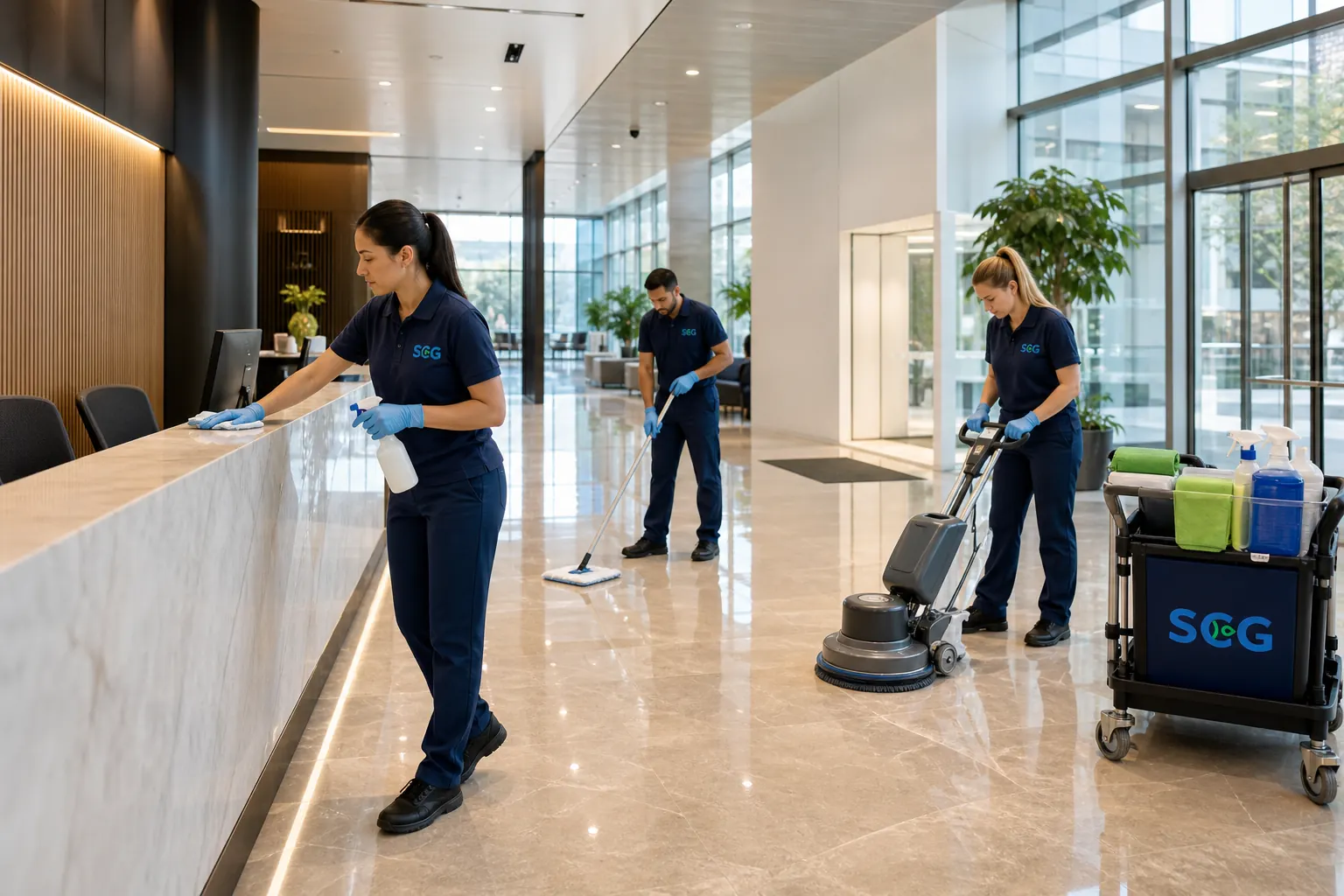
Every shared space in your building.
Lobbies & Hallways
Regular cleaning of entrance lobbies, corridors, and hallways — maintaining a welcoming first impression.
Lifts & Staircases
Special attention to high-traffic lifts and staircases — cleaned frequently to maintain hygiene and appearance.
Outdoor & Pathways
Sweeping and cleaning of outdoor pathways, gardens, recreational spaces, and building exteriors.
Garbage Room Maintenance
Regular cleaning and sanitising of garbage rooms and bin areas to prevent odours and pest attraction.
Car Park Cleaning
Sweeping, scrubbing, and maintaining car park areas to keep them clean, safe, and presentable.
Pool & BBQ Areas
Cleaning and maintaining pool surrounds, BBQ areas, and shared recreational facilities.
Why strata managers choose us.
Enhanced Property Value
Well-maintained common areas preserve and increase the appeal and market value of individual units.
Resident Satisfaction
Residents feel more comfortable and proud in a clean building — reducing complaints and improving community harmony.
Safety & Hygiene
Reduces the risk of accidents in common areas and prevents the spread of germs among residents.
Cost-Effective Management
Efficient, regular cleaning reduces long-term maintenance costs and prevents damage from neglect.
What a strata cleaning scope of works covers
A strata cleaning scope of works is a written list of every common-area task and how often it happens. It is the document that prevents arguments later, because it defines exactly what the owners corporation is buying. A weak scope reads “clean common areas”; a usable one names the lobby, each stairwell, both lifts, level B1 and B2 of the car park, the bin room and the garden path, and puts a frequency next to each.
Core recurring tasks generally include vacuuming or mopping lobby and corridor floors, spot-cleaning walls and entry glass, wiping lift buttons, handrails, intercom panels and door handles, cleaning lift door tracks, sweeping entry steps, and clearing rubbish and mail clutter from letterbox areas.
Periodic tasks sit on a longer cycle: car park sweeping and scrubbing, internal and external window cleaning, pressure washing of entries and bin areas, carpet extraction in corridors, high-level cobweb removal and light diffuser cleaning. Separating these from the recurring service keeps the levy predictable while still funding the work that protects the building.
Scheduled cleaning versus reactive callouts
Most of the value in a strata contract comes from the scheduled visit — the same tasks on the same days, so residents notice consistency rather than a single deep clean. Predictable scheduling also lets the building manager plan around it, sequencing bin day, gardening and contractor works so the building is not cleaned an hour before a delivery marks up the lobby.
Reactive work is the other half. Broken glass in the car park, a spill in a lift, a burst bin bag in a chute or graffiti on an entry wall all need an out-of-cycle response. It is worth agreeing up front how reactive callouts are requested, who is authorised to request them, and how they are charged. That is where strata cleaning budgets usually blow out.
Buildings with high turnover — short-stay lots, student accommodation or a large proportion of rentals — should expect more reactive work than an owner-occupied block, and should budget for it rather than treating each callout as a surprise.
How strata cleaning is quoted
A proper quote starts with a site walk, not a phone call. We look at the entry, every stairwell and lift, each car park level, the bin room and any shared amenity, then measure the common floor area and count the touchpoints that need frequent attention. That produces an hours-per-visit figure, and the price is built on those hours.
The cost drivers are labour hours, visit frequency, access constraints and periodic extras. A basement car park that needs a ride-on sweeper, or a bin room that needs pressure washing rather than mopping, changes the equipment and therefore the price. Restricted access windows — no noise before 7am, no lift bookings on weekends — also change how the hours are built.
We do not publish a fixed rate for strata work, because two buildings with the same number of lots can differ threefold in cleaning hours. Ask any contractor to show the hours behind the number, then compare like for like. A free, no-obligation quote from Sydney Clean Group sets that out in writing for the committee.
Working with the strata manager, committee and building manager
Three parties usually sit between the cleaner and the residents. The strata manager administers the owners corporation, handles the paperwork and processes the invoices. The strata committee makes the decision and carries the residents' expectations. An on-site building manager, where one exists, directs the day-to-day work.
Clear lines matter. If every resident can direct the cleaner, the scope drifts and the invoice follows. The workable arrangement is a single point of instruction — normally the building manager or the committee's nominated contact — with anything outside the agreed scope quoted before it happens.
Handover between strata managers is the other pressure point. When a building changes managing agents, the written scope and service schedule are what survive the transition. Keep a copy with the committee, not only with the agent.
Bin rooms, waste and the complaints they generate
More strata complaints trace back to waste than to any other common area. Bin rooms concentrate odour, liquid, pests and noise in one poorly ventilated space, and a room that is only dry-swept will smell within days no matter how often the bins are emptied.
Effective bin room work means hosing or scrubbing the floor rather than sweeping it, deodorising, wiping down chute hoppers and the walls around them, and keeping the walkway clear so residents are not stepping over bags. Where the building has a chute, the chute itself needs periodic cleaning on its own cycle — that is specialist work and belongs in the scope as a named line item.
Bin presentation and return on collection day is a separate task again. It has to match the actual council collection calendar for the street, and it is worth agreeing in advance who is responsible when a public holiday shifts the collection.
What to check when comparing strata cleaning contractors
Ask for the scope in writing with a frequency against every task, and check whether the items you care about — lift tracks, bin room floor, car park levels, entry glass — are actually named. A quote that lists only “common areas” cannot be compared against anything.
Confirm public liability insurance and workers compensation, ask how staff are inducted to your building's access and work health and safety requirements, and check whether the same cleaner attends each visit. Continuity is what produces consistency in a strata building; a rotating roster rarely learns the quirks of a particular basement or bin room.
Finally, check what happens when something goes wrong. How is a missed visit reported and made good, and who answers the phone on a Saturday? Sydney Clean Group works with owners corporations and building managers across Greater Sydney on exactly these terms — call 02 9139 8401 to walk through your building's scope.
Strata Cleaning — FAQs.
What does strata cleaning actually include?
Strata cleaning covers common property only — the areas the owners corporation is responsible for, rather than anything inside an individual lot. That usually means entry lobbies, corridors, stairwells, lift interiors and door tracks, letterbox areas, car parks, bin rooms, garden paths and shared amenities such as pool surrounds and BBQ areas. Windows, high-level work and pressure washing are normally quoted as separate periodic items rather than part of the recurring visit.
What is the difference between strata cleaning and building maintenance?
Cleaning keeps common property presentable and hygienic: sweeping, mopping, vacuuming, wiping touchpoints, emptying bins and tidying garden paths. Maintenance repairs or replaces the building itself — lights, locks, plumbing, lift servicing, painting. A cleaner can report a blown lobby light or a leaking bin room tap, and a good contractor does, but the repair sits with the owners corporation's trades under a separate maintenance budget.
How often should common areas be cleaned?
Frequency follows traffic, not the number of lots. A small walk-up block may only need a fortnightly visit, while a high-rise with a busy lobby, two lifts and a basement car park often needs several visits a week plus daily bin room attention. The usual structure is a weekly core service with car parks, windows and pressure washing folded in on a monthly or quarterly cycle.
Who decides the strata cleaning scope, the strata manager or the committee?
The owners corporation decides, usually acting through the strata committee, and the strata manager runs the process: collecting quotes, tabling them at a meeting and issuing the engagement once a resolution passes. Larger buildings with an on-site building manager often delegate day-to-day direction to them. We are happy to scope directly with whoever holds the relationship and put the same written scope in front of the committee.
What drives the cost of a strata cleaning contract?
The main drivers are visits per week, the floor area of common property, how many lifts and stairwells need covering, whether there is a basement car park, and how waste is handled. Pools, gyms and roof terraces add labour. Periodic items such as window cleaning, carpet extraction and car park scrubbing are priced separately so the committee can see clearly what is included and what is extra.
Do you handle bin rooms, chutes and bin presentation?
Yes. Bin rooms are the most common source of complaints in a strata building, so they are usually the highest-frequency item in a scope. The work includes washing down the floor, deodorising, wiping chute hoppers and keeping the walkway clear. Presenting and returning bins on collection day is a separate scheduled task that has to match the council collection calendar for your street.
How do you report work back to the strata committee?
Every scope should come with a written service schedule listing each task and its frequency, so the committee can see what it is paying for. On top of that we log completed visits and flag defects noticed in common areas — a failed light, graffiti, a blocked drain, water ingress — so they reach the strata manager before they turn into a larger repair bill.
More strata and building services.
Suburb coverage for strata buildings across Greater Sydney.
Service packages for owners corporations and building managers.
Periodic glass and entry facade cleaning for apartment buildings.
Extraction for corridor and lobby carpet on a periodic cycle.
A cleaner building. Happier residents.
Free quotes, no obligation. We work with strata managers across Sydney to deliver tailored cleaning solutions.