
Childcare Cleaning
Sydney.
Childcare cleaning in Sydney for long day care, preschools and OSHC services — using child-safe, non-toxic products to maintain a healthy and welcoming environment for children and families.
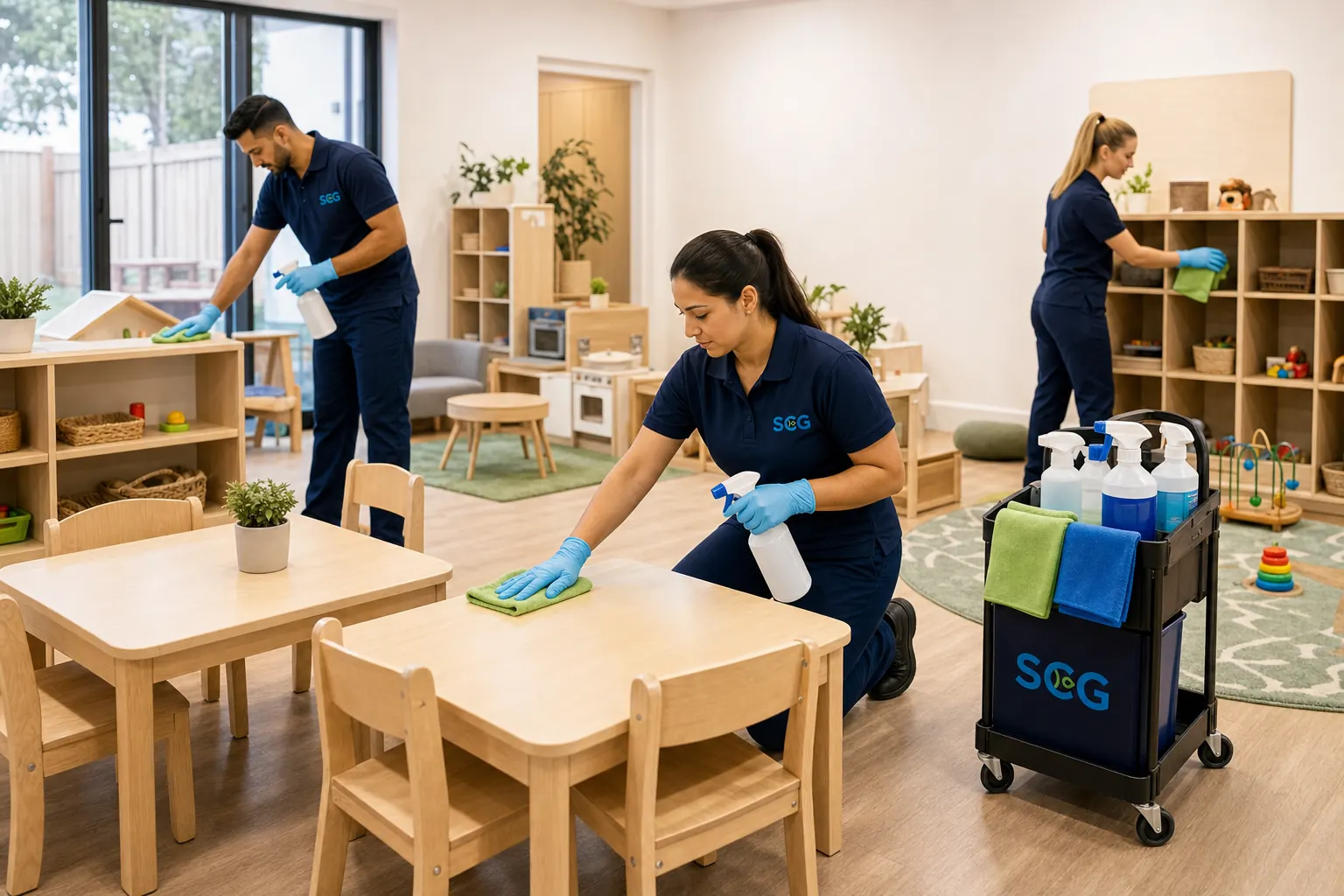
Child care cleaning services for Sydney centres
Sydney Clean Group provides childcare cleaning services to long day care centres, preschools, early learning centres and OSHC services across Greater Sydney, working from our base at 77 Garfield Street, Wentworthville NSW 2145. Whether you write it as childcare cleaning, child care cleaning or childcare centre cleaning, the work is the same: a documented, room-by-room hygiene programme built around children who crawl on the floor and put things in their mouths.
A childcare centre is the hardest hygiene environment in commercial cleaning that is not a hospital. The surfaces that matter sit below adult eye level, the population is immunologically naive, and a single missed nappy change bench can move a gastro outbreak through forty families in a week. Everything we do in a centre is designed around removing that risk, not around making the room look tidy.
Our scope separates cleaning from disinfection, applies a written frequency to every surface class, and produces the records a director needs when the regulatory authority walks in. Products are selected for safety around children first and cleaning performance second.
Centre operators with several sites can bring them onto one scope through commercial cleaning across Greater Sydney.
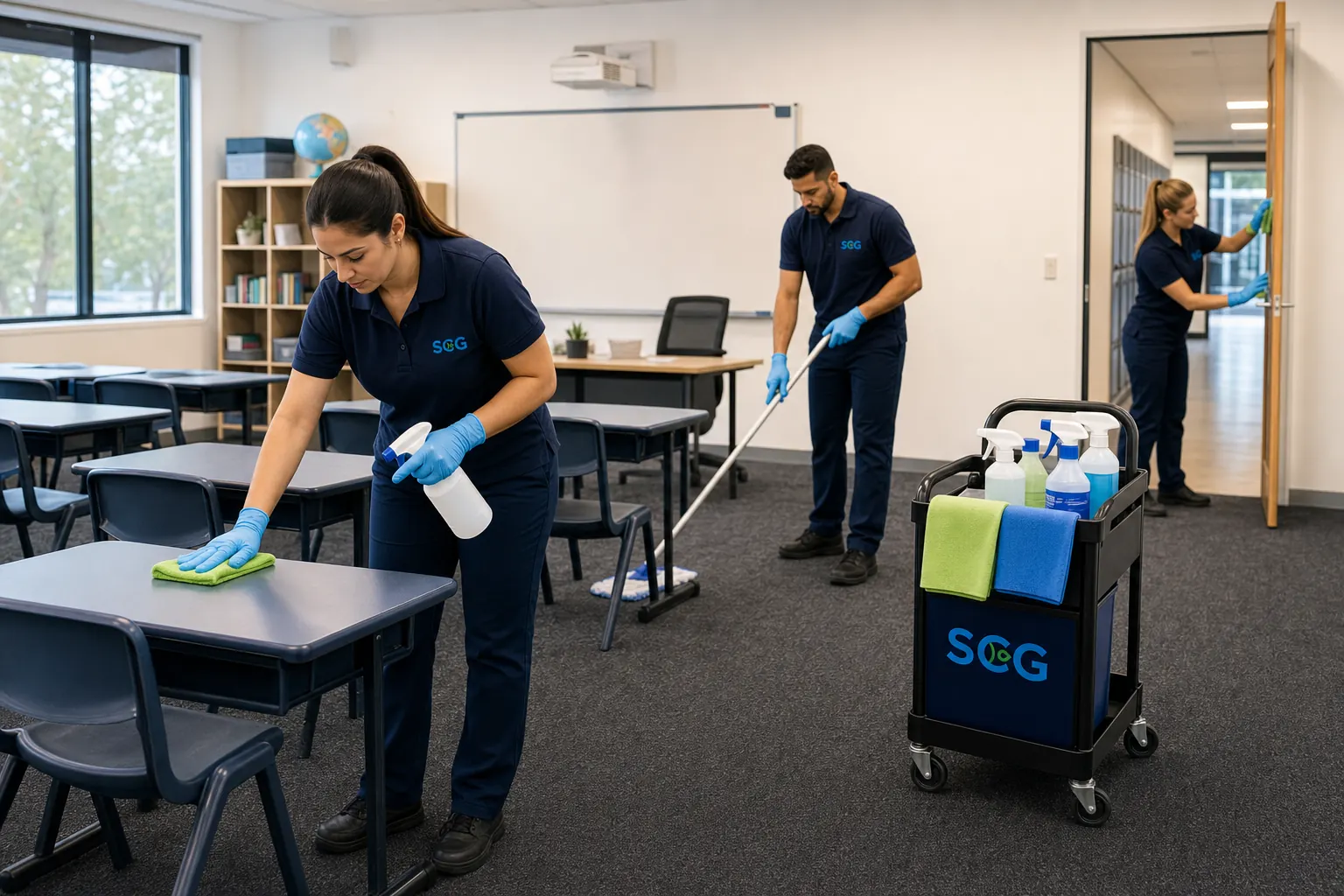
Every area of your centre.
Toy & Equipment Sanitisation
Regular cleaning and sanitisation of toys, play equipment, and learning materials to prevent the spread of germs among children.
Surface Disinfection
High-touch surfaces like doorknobs, tables, chairs, and countertops are frequently disinfected to maintain a germ-free environment.
Floor Cleaning
Safe and effective cleaning of floors using non-toxic, hypoallergenic cleaning products suitable for young children who spend time on the ground.
Nappy Change Areas & Bathrooms
Thorough cleaning and sanitisation of nappy changing stations and bathrooms to ensure these areas are always hygienic and safe.
Sleep Rooms, Cots & Mattresses
Cots, cot rails, mattress covers and the sleep mat stack sanitised on a fixed rotation so mats are never stored damp or unsanitised.
Kitchen, Outdoor Play & Soft-Fall
Food preparation and bottle prep areas cleaned with dedicated colour-coded equipment, plus soft-fall surfaces, sandpit surrounds and outdoor furniture.
Why childcare centres trust us.
Enhanced Health & Safety
Professional cleaning significantly reduces the risk of infectious diseases spreading — a critical aspect in environments populated by young children.
Compliance with Regulations
Adherence to strict cleaning standards and health codes that govern childcare facilities, ensuring compliance with local and national regulations.
Peace of Mind for Parents & Staff
Knowing that the facility is thoroughly cleaned allows parents and staff to focus on the children's learning and development without health concerns.
Positive & Welcoming Environment
A clean and well-maintained facility creates a welcoming atmosphere for children and their families, contributing to a positive reputation in the community.
Why childcare cleaning is not office cleaning in a smaller room
The single biggest mistake made in childcare centre cleaning is applying a commercial office scope to a room full of children. An office scope is written around the surfaces adults touch standing up — desks, keyboards, door handles at 1050mm, kitchen benches. In a centre, the contaminated zone is the bottom 600mm of the room: skirtings, low ledges, the underside of tables, chair legs, cot rails, the bottom third of every door, the step in front of the toilet, and the floor itself, which children spend most of the day lying on.
The second difference is what happens to the object after it is touched. In an office, a contaminated surface stays where it is. In a childcare centre, it is picked up, mouthed, dropped, picked up by a different child and carried into another room. Cleaning a playroom without cleaning the toys in it achieves almost nothing, which is why toy washing has to sit inside the contract rather than be treated as an extra.
The third is method. Childcare cleaning separates cleaning from disinfection and performs them in that order. Soil is removed first with a neutral detergent, then a disinfectant is applied and left wet for its full label contact time. A single wipe with a combined spray-and-wipe product looks identical to a director walking past and disinfects almost nothing, because the active agent has no soil-free surface to work on and no time to work in.
Quality Area 2 and what the National Quality Standard expects of a centre
Approved education and care services in Australia are assessed against the National Quality Standard, and Quality Area 2 covers children's health and safety. It is where hygiene practice, nappy changing and toileting routines, food safety, and the management of infectious disease and injury all sit. The Standard places those obligations on the service, not on its cleaning contractor — but the physical state of the environment is the first evidence an authorised officer sees, and it is visible within about thirty seconds of entering a room.
What Quality Area 2 requires of a centre, in practice, is that hygiene is a documented and consistently applied system rather than an intention. A centre needs to be able to show what gets cleaned, how often, with what, and who checked. Most centres have excellent daytime educator practice and no written evidence of what happens after 6pm, which is exactly the gap a properly written cleaning scope closes.
We support that with paperwork, not with claims about our own credentials. Every centre we clean receives a written scope of works with frequencies against each area, a product register with current safety data sheets for everything we bring on site, insurance certificates of currency, and a monthly quality audit against a checklist. That folder is what a director hands over during assessment and rating, and it is ready on an ordinary Tuesday rather than assembled the night before.
Nappy change areas, bathrooms and sleep rooms
Nappy change areas are the highest-consequence surfaces in the building. The bench, the mat, the bin lid and pedal, the tap handles, the soap and glove dispensers and the step or ladder children use are all treated as a single unit and cleaned with dedicated equipment that never crosses into a playroom or kitchen. The bench is detergent-cleaned and then disinfected with full contact time at every attendance, and change mats are checked for splits, because a torn vinyl mat cannot be disinfected at all and has to be replaced rather than cleaned.
Children's bathrooms need different attention to adult amenities. Toilets in a centre are low, unpartitioned and heavily contacted by hands rather than only by the body — the seat, the flush button, the rim, the front of the pan, the step, the low tap and the hand-drying point all matter more than the floor behind the pan. We clean the touchpoints first with clean cloths and finish with the floor, never the reverse.
Sleep rooms are the area most often left off a scope entirely. Cots, cot rails, mattress covers, the sleep mat stack and the storage the linen sits in all need a documented cycle. Mats stored damp or stacked without sanitising will grow mould in a Sydney summer, and the smell is usually the first thing a parent notices on a tour. Mattress and mat sanitising sits on a fixed rotation in our scope rather than being done when someone raises it.
Toys, high-touch surfaces and soft furnishings
Toy sanitising works on a rotation, not a blitz. Hard plastic toys are washed and disinfected on a documented cycle, with a mouthed-toy bucket used by educators during the day so anything a child has mouthed is pulled out of circulation immediately and cleaned that night rather than being wiped and handed back. Wooden toys, puzzles and construction pieces get a different treatment because they cannot be soaked.
High-touch surfaces in a centre are not the ones in a commercial checklist. They are the light switches at child height, the sign-in kiosk and its stylus, the gate latches, handrails on the stairs and ramp, the bag locker fronts, the drink bottle trolley, the tap on the water station, the high chair tray and harness, and every door handle at both adult and child height. These go on a daily two-stage clean.
Soft furnishings are where centres fall behind fastest, because there is no obvious moment at which they look dirty. Cushions, floor rugs, book corner beanbags, dress-up boxes, fabric storage pockets and the felt on display boards absorb everything and are almost never scheduled. We put them on a written rotation — laundered or steam treated on a fixed cycle — so the cycle survives a change of director.
Kitchens, food preparation, allergens and outbreak response
Centre kitchens carry commercial food safety obligations plus an allergen problem that a café does not have. A trace of egg or peanut on a bench matters far more when the person eating from it is two years old and anaphylactic. We clean food preparation areas with dedicated colour-coded equipment, work bench-to-floor, and treat the servery, trolleys and the bottle preparation area as part of the kitchen zone rather than as part of the room they sit next to.
High chairs, tables and floors after mealtimes are the crossover point between the kitchen and the playroom. Tables are cleaned with a detergent step before any sanitiser, because food residue neutralises most sanitisers on contact — wiping a milk-covered table with sanitiser alone is a very common and completely ineffective routine.
During an outbreak — gastroenteritis, hand foot and mouth disease, or a run of respiratory illness — the centre's own exclusion and notification obligations sit with the director, and the cleaning response has to intensify around them. We increase attendance frequency, move to single-use cloths, extend disinfectant contact times, pull all mouthed and soft toys for treatment, and focus on the specific transmission routes involved rather than cleaning everything harder. The scope is documented in advance so it can be triggered by a phone call rather than negotiated mid-outbreak.
Products, Working With Children Checks, cleaning windows and the end-of-year deep clean
Products in a centre are selected for safety around children first. We use low-VOC, fragrance-controlled detergents and disinfectants that are safe on surfaces children mouth once fully dry, avoid strong chlorine odours in occupied rooms, and never leave decanted or unlabelled chemicals on site. Everything is stored in a locked area agreed with the director, and the full product register with safety data sheets goes to the centre.
Child-related work in New South Wales requires a Working With Children Check, and the service is required to sight and verify the clearance for anyone working with or around children. We supply the WWCC number and police check details for every cleaner rostered to your centre so the director can verify them directly through the NSW Office of the Children's Guardian, and we tell you in advance when a relief cleaner is attending rather than sending an unknown person to a locked building.
Most Sydney centres close between 6pm and 6.30pm, so we clean in the evening after the last child leaves or very early before a 6.30am opening. Either window allows disinfectant contact times to be observed properly, which is impossible around children. The end-of-year closure is when the heavy work happens: carpet extraction, hard floor strip and seal, mattress and mat sanitising, high dusting, vent and fan cleaning, full toy washes and inside-cupboard cleaning. Multi-site operators can run every centre on one scope, one schedule and one invoice with the same audit applied at each site.
Childcare Cleaning — FAQs.
What does a childcare cleaning service actually cover?
A proper childcare cleaning scope covers playrooms and low-level surfaces, nappy change areas and children's bathrooms, sleep rooms including cots, mattresses and sleep mats, toy and equipment sanitising on a rotation, the kitchen and bottle preparation area, high chairs and mealtime surfaces, staff and administration areas, and outdoor play areas including soft-fall and sandpit surrounds. Each area carries a written frequency rather than being cleaned when someone notices.
How much does childcare cleaning cost in Sydney?
Childcare cleaning in Sydney is priced on the number of rooms, enrolled capacity, floor and soft-furnishing types and how often you need attendance. A 40-place centre cleaned five nights a week prices very differently to a 120-place service with multiple bathrooms and a commercial kitchen. We quote from a written scope after a free walk-through. Call 02 9139 8401.
What cleaning products are safe to use in a child care centre?
Products used in a centre should be low-VOC, fragrance-controlled, and safe on surfaces children mouth once fully dry, with a current safety data sheet for every item and nothing decanted into unlabelled bottles. Chemicals must be stored in a locked area children cannot access. We supply the full product register to the centre so it sits in your health and safety documentation.
Do childcare cleaners need a Working With Children Check?
Child-related work in New South Wales requires a Working With Children Check, and the service is required to sight and verify the clearance for anyone working with or around children. We provide the WWCC number and police check details for every cleaner rostered to your centre so the director can verify them directly with the NSW Office of the Children's Guardian.
Do you clean toys, sleep mats and mattresses?
Yes. Toy washing and rotation, floor mat and sleep mattress sanitising and soft furnishing treatment sit inside our standard childcare scope on a documented frequency rather than as an extra. Educators can place any mouthed toy into a designated bucket during the day and it is pulled from circulation and cleaned that night.
How does cleaning support Quality Area 2 of the National Quality Standard?
Quality Area 2 covers children's health and safety, including hygiene, nappy changing and toileting routines, food safety and the management of infectious disease. Those obligations sit with the service, not the cleaner. Cleaning supports them by making hygiene a documented system — a written scope with frequencies, a product register with safety data sheets, and a monthly audit — so the centre can show what is cleaned, how often and by whom.
What happens if we have a gastro or hand, foot and mouth outbreak?
The centre's exclusion and notification obligations stay with the director. Our cleaning response intensifies around them: increased attendance frequency, single-use cloths, extended disinfectant contact times, all mouthed and soft toys pulled for treatment, and focus on the specific transmission routes involved. The outbreak scope is written in advance so it can be triggered by a phone call.
Can you clean around our centre's operating hours?
Yes. Most Sydney centres are cleaned in the evening after the last child leaves or very early before a 6.30am opening, so disinfectant contact times can be observed properly. Deep cleans such as carpet extraction, floor sealing and full toy washes are scheduled into the end-of-year closure and long weekends.
More cleaning services for education and care.
Classrooms, halls and amenities cleaned around term timetables.
Suburb coverage, response times and how quoting works locally.
Infection-control cleaning for clinics and allied health suites.
The full commercial programme behind our childcare service.
Administration areas, staff rooms and centre offices.
Hot-water extraction for playroom carpet and floor rugs.
Get Started Today
Contact us today to schedule a free consultation and discover how our cleaning services can benefit you. Let us handle the cleaning so you can focus on what matters most.