
Warehouse Cleaning
Sydney.
Warehouse cleaning in Sydney's actual industrial corridors — Wetherill Park, Smithfield, Yennora, Silverwater, Seven Hills, Arndell Park, Eastern Creek, Moorebank, Prestons and Ingleburn — with ride-on floor scrubbing, racking dusting, dock levellers and hardstand washdowns.
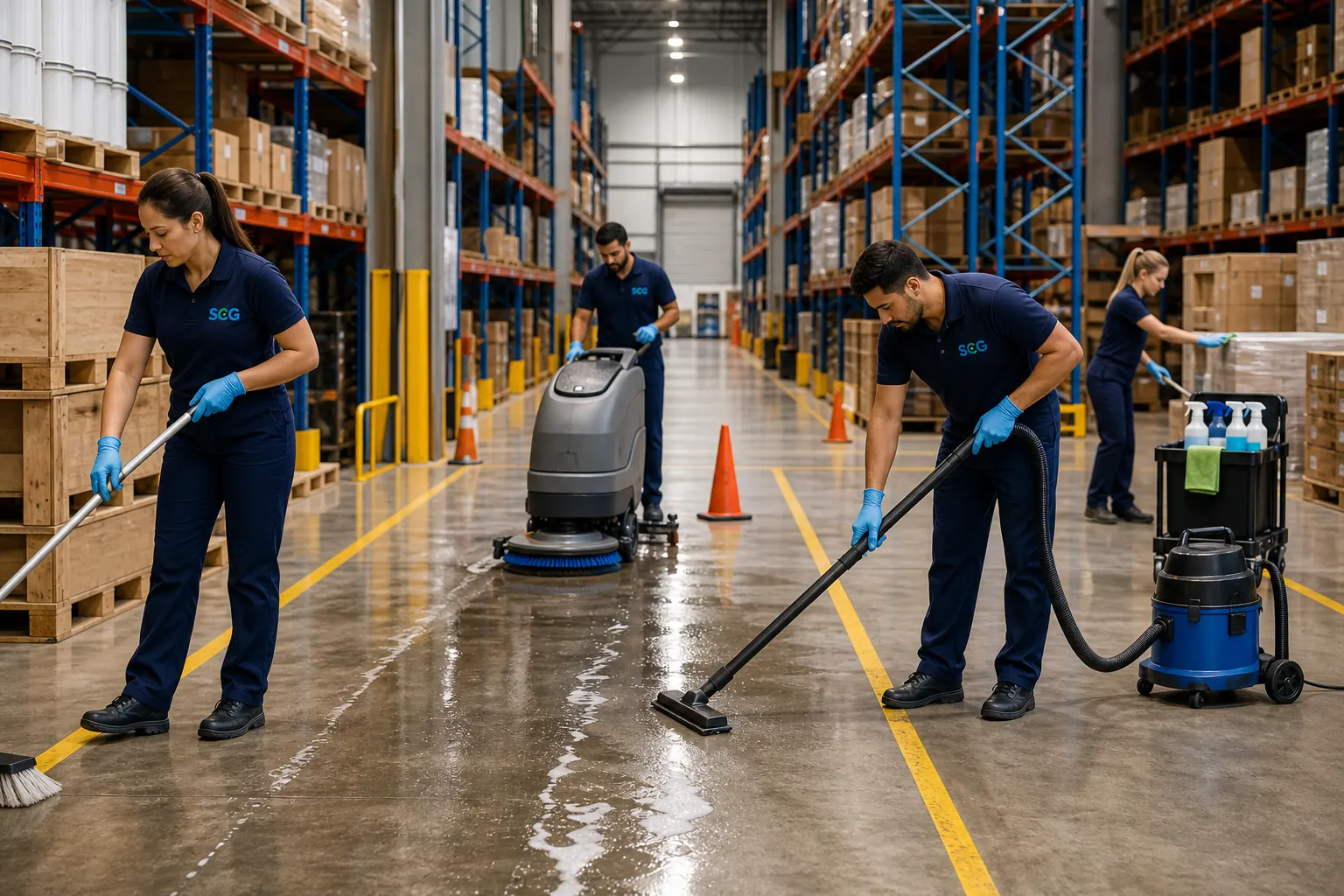
Built for floors measured in thousands of square metres.
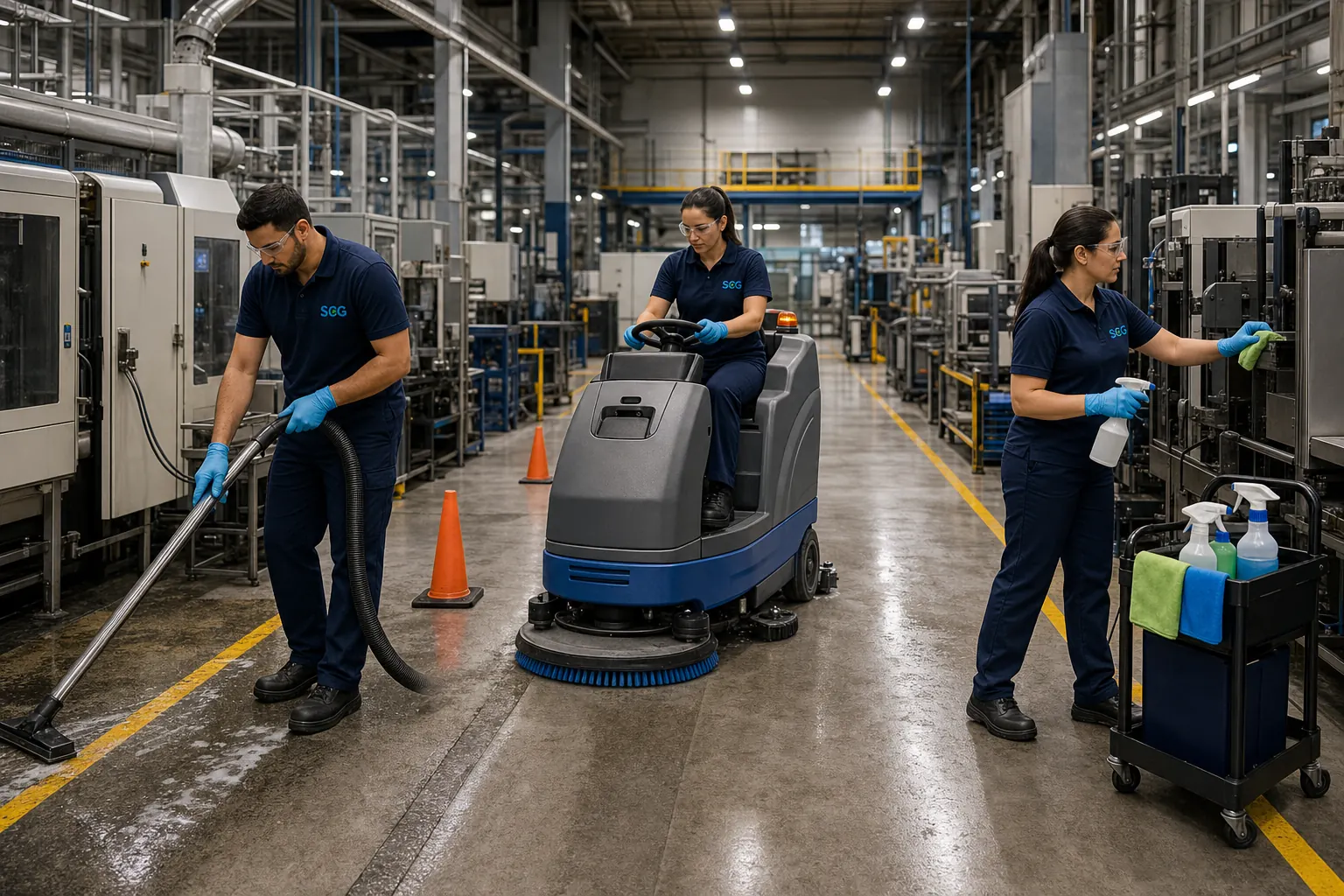
This is the geographic page for warehouse cleaning in Sydney: which industrial corridors we work in, and what warehouses in each of them actually need. It sits alongside our general warehouse cleaning explainer, which covers what the service is and what a standard scope includes. Heavy manufacturing, production plant and machinery work is a different discipline and is handled on our industrial cleaning page.
A distribution warehouse cannot be cleaned the way an office is cleaned. The floor plate is too large for manual methods, the soil load is heavier, forklift traffic never fully stops, and the dust that matters most is sitting on racking beams three levels up where nobody looks until it drops onto product. We bring the right equipment — ride-on and walk-behind scrubbers, industrial sweepers, high-reach vacuum systems and pressure units — and the right crew discipline. Every cleaner is site-inducted, high-vis and steel-cap equipped, and briefed on your traffic management plan and pedestrian exclusion zones before the first shift.
Our warehouse work concentrates in Sydney's industrial corridors: Wetherill Park, Smithfield, Yennora, Prestons, Moorebank, Ingleburn, Eastern Creek, Erskine Park, Arndell Park, Huntingwood, Prospect, Seven Hills, Minto and Silverwater, plus the inner industrial pockets at Botany, Banksmeadow, Alexandria and Rydalmere.
If the site is a production facility rather than a storage and distribution building — machinery surrounds, wash bays, process residue — you want industrial cleaning for Sydney factories and plants instead.
What warehouse cleaning covers.
Floor Scrubbing & Sweeping
Ride-on and walk-behind scrubbing of aisles, pick faces, staging areas and inbound zones, with pad and chemical matched to the floor seal.
Racking & Beam Dusting
High-reach vacuum removal of dust from racking uprights, beams and ledges, planned so no work occurs above active forklift movement.
Docks & Levellers
Dock pits, levellers, roller door tracks and dock aprons cleaned and degreased so seals and mechanisms keep working.
Hardstand & Truck Yards
Pressure washing of hardstand, truck aprons and driveways, plus clearing of drainage grates and oil spot treatment.
Waste & Compactor Areas
Bin bays, compactor surrounds and cardboard staging cleaned and deodorised — the area that fails audits most often.
Amenities & Front Office
Crib rooms, change rooms, showers, toilets and the office at the front of the building on a daily or per-shift routine.
Why logistics sites use us.
Scheduled Around Your Shifts
Work fits between the last pick and the first inbound truck, planned from your shift pattern rather than our roster.
Audit-Ready Presentation
Customer visits, food safety audits and WHS inspections stop being a scramble because the site is already in that condition.
Correct Industrial Equipment
Machines sized to the floor plate, with the right pad and chemical for the seal so the floor is preserved rather than stripped.
Local Crews, Reliable Starts
We staff the western and south-western corridors locally, so a 5am start is a 5am start rather than a traffic gamble.
Racking dust: the part everyone skips
Racking and beam dust is the most consistently neglected item in Sydney warehouse cleaning, because it is invisible from the floor and expensive to reach. It accumulates on beams, uprights, ledges and the tops of stored cartons, and it eventually falls — onto product, onto pick faces, and into the path of anyone doing a customer or food safety audit.
We remove it with high-reach vacuum systems rather than blowing it around with compressed air, which simply redistributes the problem and puts it into the breathing zone. Work is planned level by level, coordinated with your supervisor so nothing is happening above active forklift movement, and documented under a safe work method statement.
For food, pharmaceutical and consumer goods sites, racking dusting is not cosmetic. It is usually an explicit audit item, and the difference between a site that passes without comment and a site that receives a corrective action is often exactly this task.
Floor programmes that preserve the seal
The most expensive mistake in warehouse cleaning is aggressive floor treatment. A high-alkaline chemical and a hard pad will strip the seal off a coated concrete floor, and the floor then dirties faster every subsequent month, absorbs oil, and eventually needs recoating at a cost far beyond any cleaning contract.
We match pad and chemical to the floor's actual finish — sealed concrete, bare concrete, or epoxy and polyurethane coating — and we scrub frequently rather than intensively. A weekly scrub keeps a floor indefinitely serviceable; a twice-yearly restorative clean costs more over the year and never fully recovers the surface.
Line marking is part of the floor programme too. Aisle markings, pedestrian walkways and hazard zones only function as safety controls while they are visible, and a floor cleaned with the wrong method loses that visibility long before anyone repaints it.
Sydney's western industrial corridor: Wetherill Park, Smithfield, Yennora and Seven Hills
Wetherill Park and Smithfield form one continuous estate and account for a large share of the warehouse cleaning work in Sydney. The building stock is mixed-age: 1980s and 1990s tilt-slab units with bare or lightly sealed concrete floors sitting next to modern high-clearance facilities. The older units are the ones that need attention to floor method, because decades of forklift traffic on unsealed concrete produce a dust that a mop simply redistributes. These sites usually want a weekly scrub plus a quarterly hardstand wash, because the yards are shared and truck movements track soil straight back inside.
Yennora is dominated by the rail-served distribution stock around the intermodal terminal, with long single-tenant buildings and heavy inbound container traffic. Container unloading generates cardboard, shrink wrap and pallet debris at a volume that overwhelms a general clean, so the scope needs a defined waste and cardboard staging routine rather than a line that says 'remove rubbish'.
Seven Hills and Arndell Park run smaller multi-unit industrial complexes with a high proportion of trade counters and attached offices at the front. Those buildings have a split personality — a customer-facing front that needs daily presentation and amenity cleaning, and a working warehouse behind it that needs periodic floor and racking work. Quoting them as a single square-metre rate is how contractors either lose money or under-service the front.
Eastern Creek, Prestons, Moorebank, Ingleburn and Silverwater
Eastern Creek and the surrounding Erskine Park and Huntingwood estates are Sydney's newest large-format distribution stock: 20,000 to 60,000 square metre floor plates, high-bay racking, coated floors and automated or semi-automated pick systems. The floor coating is the thing to protect here. These are specified epoxy or polyurethane surfaces and the wrong pad or an alkaline chemical will dull them permanently, so frequency-based light scrubbing beats occasional aggressive cleaning every time.
Moorebank and Prestons sit around the intermodal precinct and run heavy 24-hour truck movements. Hardstand, dock aprons, dock pits and drainage grates carry a much bigger share of the workload than in a quieter estate, and oil and hydraulic spotting on the apron is continuous rather than occasional. Cleaning windows are tight because there is rarely a genuine gap between shifts, so most of these sites take a weekend slot for floor and racking work with a daily amenities and office attendance.
Ingleburn and Minto carry a large amount of food and consumer goods warehousing, where racking and beam dusting stops being cosmetic and becomes an explicit audit item. Silverwater and the inner pockets at Rydalmere, Alexandria, Botany and Banksmeadow are older, tighter and harder to access — narrow driveways, shared yards, limited machine storage — so equipment has to be sized to the building rather than to the floor area.
Scheduling and access on live warehouse sites
Most Sydney warehouses run either an early morning clean before the first pick wave or an evening clean after the last dispatch. Continuous and two-shift operations typically use the weekend window for floor scrubbing and racking work, with a daily amenities and office service in between.
Access details decide whether a schedule survives contact with reality: gate and alarm codes, where the water point and power outlets are, where machines can be stored and charged on site, and who to call when a dock is unexpectedly occupied. We settle all of it at the site walk rather than discovering it on the first shift.
Sydney Clean Group is at 77 Garfield Street, Wentworthville NSW 2145. Call 02 9139 8401 to book a site walk and receive a written warehouse cleaning scope.
Warehouse Cleaning Sydney — FAQs.
What does warehouse cleaning in Sydney include?
A typical scope covers floor scrubbing and sweeping of aisles and pick faces, racking and beam dusting, dock pits and levellers, hardstand and truck yard pressure washing, waste and compactor areas, and amenities including crib rooms, change rooms and the front office.
How often should a warehouse floor be scrubbed?
Most sites are best served by a weekly scrub. Frequent light scrubbing preserves the floor seal and takes less time each visit, whereas twice-yearly restorative cleaning costs more across the year and never fully recovers the surface.
Can you clean while we are operating?
Yes. Crews are site-inducted and briefed on your traffic management plan, work inside marked pedestrian zones, and stage wet areas rather than closing aisles. Most sites schedule the heavy work before the first pick wave, after the last dispatch, or on the weekend.
Do you dust racking and beams?
Yes, using high-reach vacuum systems rather than compressed air, so dust is removed rather than redistributed. Work is planned level by level and coordinated so nothing is happening above active forklift movement.
Which Sydney industrial areas do you cover for warehouse cleaning?
Wetherill Park, Smithfield, Yennora, Seven Hills, Arndell Park, Prospect, Huntingwood, Eastern Creek, Erskine Park, Prestons, Moorebank, Ingleburn and Minto, plus the inner industrial areas at Silverwater, Rydalmere, Botany, Banksmeadow and Alexandria.
Do different Sydney estates need different warehouse cleaning?
Yes. Older tilt-slab units in Wetherill Park and Smithfield need careful floor method on unsealed concrete; large-format Eastern Creek facilities need coating-safe light scrubbing; Moorebank and Prestons need far more hardstand and dock apron work because of 24-hour truck movements; and Ingleburn food warehousing needs racking dusting as an audit item.
How much does warehouse cleaning cost in Sydney?
Price is driven by floor area and finish, the amount of racking to be dusted, dock and hardstand size, amenity count and frequency. We quote from a written scope after a site walk. Call 02 9139 8401 for a free quote.
Related industrial services.
The service explainer and standard inclusions.
Local crews across Sydney's industrial suburbs.
Production floors, machinery surrounds and shutdown cleans.
The full commercial programme for mixed facilities.
Handover cleans for new and expanded warehouses.
Western Sydney estates and attached warehouse offices.
Cleaning for the converted industrial and warehouse spaces around Marrickville and the Inner West.
Zone-based cleaning for logistics sites across the Liverpool and south-west Sydney corridor.
Get a warehouse cleaning quote for your Sydney site.
Site walk, written scope and a schedule that fits between your last pick and your first inbound truck.