
Industrial Cleaning
Sydney.
Heavy industry, not general warehousing. Industrial cleaning for Sydney factories, production plants, workshops and processing facilities — machinery surrounds, production floors, process dust and residue, and planned shutdown cleans.
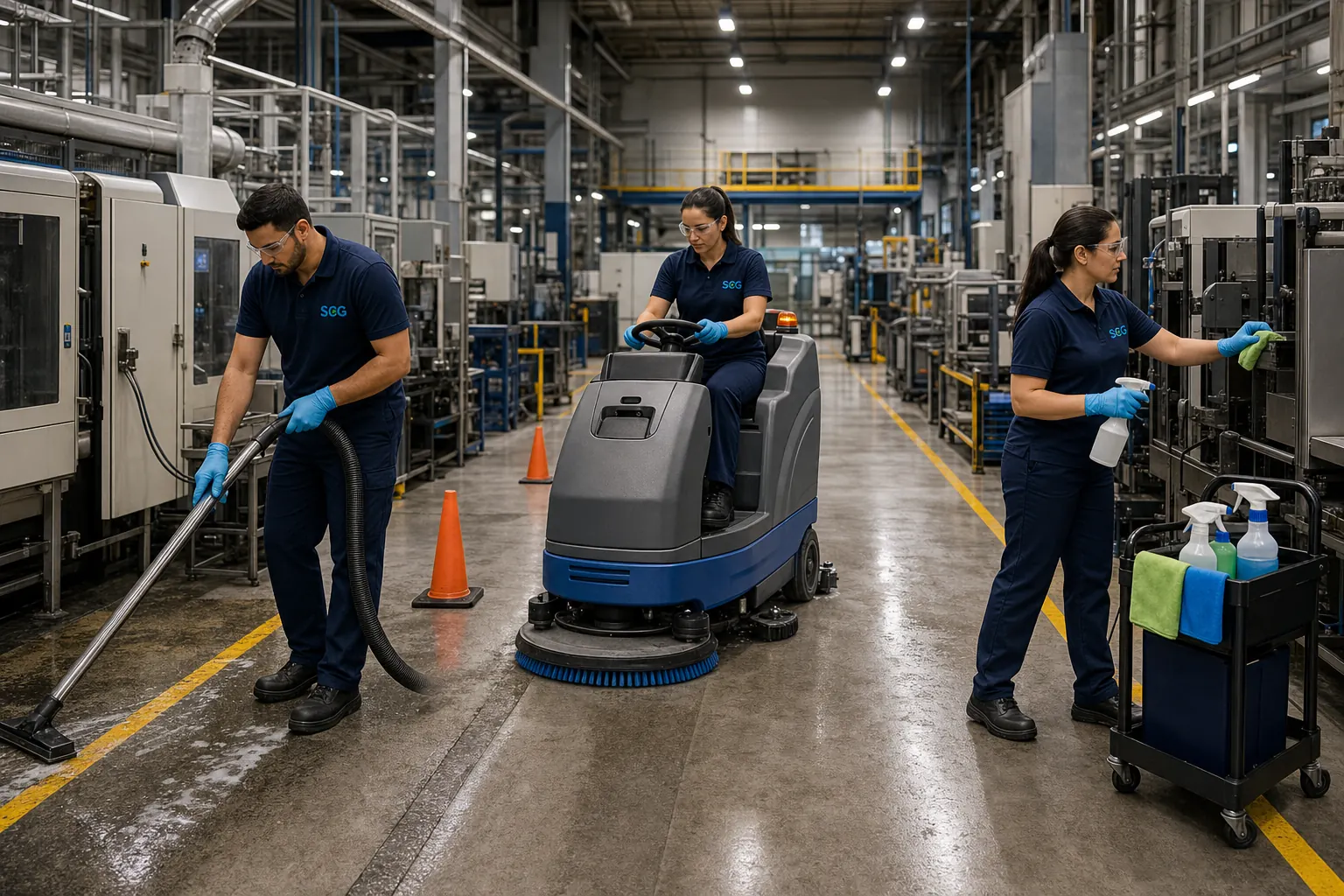
Cleaning that respects how a plant actually runs.
This page is about heavy industry — manufacturing, production and processing plant — rather than general storage and distribution. If your building is a warehouse where goods arrive, get picked and leave again, our warehouse cleaning page is the right one. If your building makes, machines, mixes, moulds or processes something, you are in the right place.
Industrial cleaning is production support, not housekeeping. On a live plant floor the cleaner is working around machinery, forklift traffic, wash-down bays, product zones and shift changeovers, and the wrong approach at the wrong moment costs far more in downtime than the cleaning contract is worth.
Our industrial crews are inducted onto your site before the first shift, briefed on your traffic management plan, isolation procedures and exclusion zones, and scheduled around the changeover window rather than dropped into the middle of a run. Every cleaner is police-checked, high-vis and steel-cap equipped, and trained on the equipment they operate.
We work across Sydney's manufacturing and processing base — food production, plastics and packaging, metal fabrication, automotive workshops, printing, cold storage and light assembly — from the western corridor at Smithfield, Wetherill Park and Eastern Creek through to the older industrial pockets at Botany, Alexandria, Silverwater and Rydalmere.
Plants with an attached storage or dispatch building can run the two halves on one agreement — see warehouse cleaning across Sydney for how the distribution side is scoped.
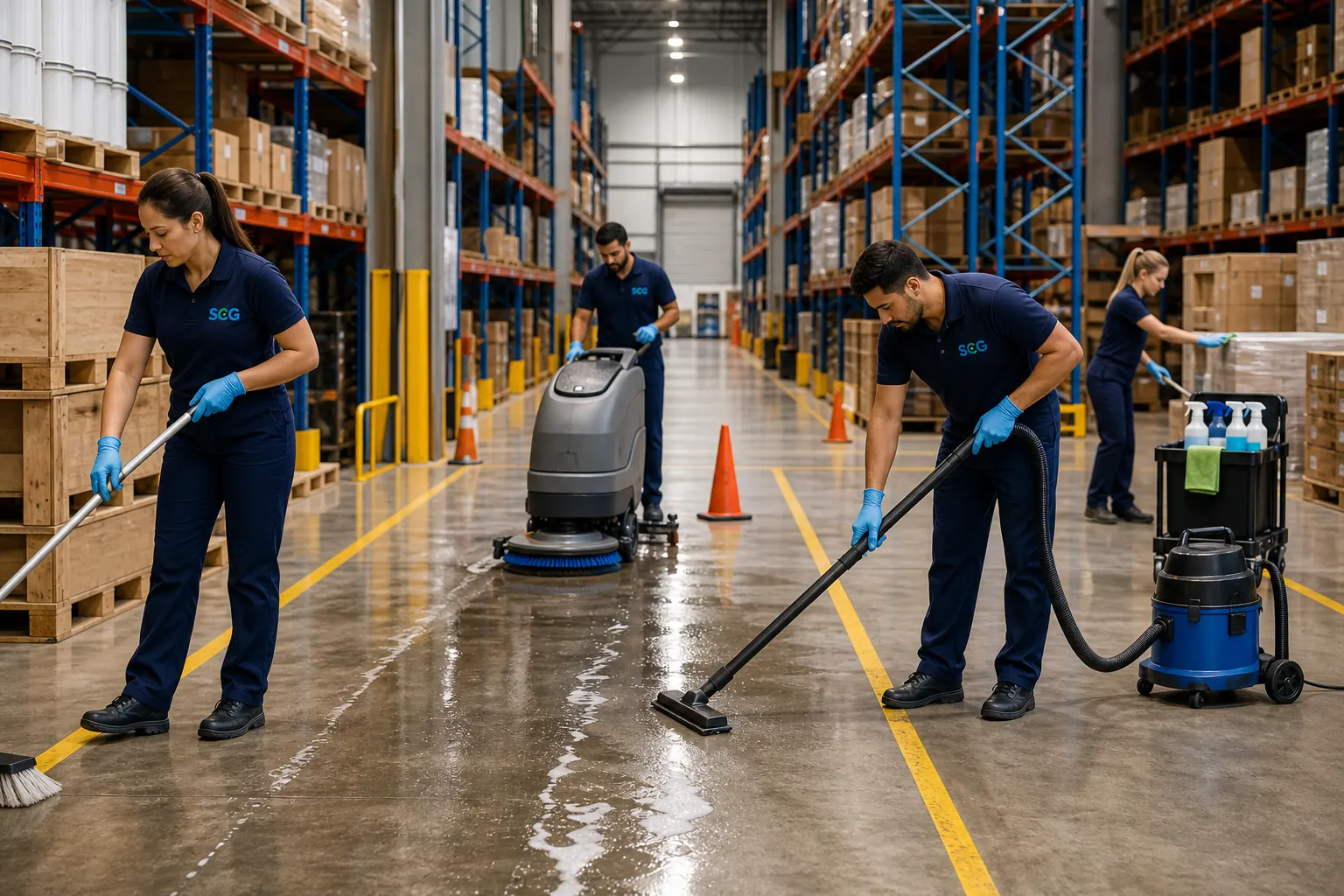
What industrial cleaning covers.
Production Floor & Aisles
Ride-on and walk-behind scrubbing of sealed and bare concrete, degreasing of trafficked zones, and line marking kept visible.
Machinery Surrounds
Cleaning of the perimeter and access zones around plant and equipment, working to your isolation and lock-out procedures.
High Dusting & Structure
Beam, duct, pipe run, light fitting and rafter dust removal at height under a documented safe work method statement.
Wash Bays & Drainage
Wash-down bay cleaning, drainage grate clearing and pit surrounds, keeping trade waste points functioning as designed.
Docks, Hardstand & Yards
Pressure washing of loading docks, aprons, hardstand and truck yards, plus bin and compactor area cleaning.
Amenities & Crib Rooms
Change rooms, showers, lockers, crib and lunch rooms and site offices sanitised daily — the areas staff judge the site by.
Why plants keep us on site.
We Work Around Production
Scheduling is built from your shift pattern and changeover window, not from our roster convenience.
Safety Documentation Ready
SWMS, safety data sheets and insurance certificates supplied before the first shift, and your contractor management system completed.
Correct Equipment
Industrial scrubbers, sweepers, vacuums and pressure units matched to your floor seal — not domestic gear on a commercial floor.
Local Crews, Reliable Starts
We staff the western and southern industrial corridors locally, so shift start times hold instead of slipping in traffic.
Industrial floors: sealed, bare and coated concrete
Getting the floor right is most of industrial cleaning. Sealed concrete responds to a neutral cleaner and a soft pad; using an aggressive pad or a high-alkaline chemical strips the seal and leaves a floor that dirties faster every subsequent month. Bare concrete is porous and needs a different approach again, usually degreasing followed by extraction rather than a wet mop that pushes soil into the surface.
Epoxy and polyurethane coated floors, common in food and pharmaceutical facilities, are the least forgiving. They mark easily, they show every wheel track, and the wrong chemistry dulls them permanently. We match pad and chemical to the coating specification rather than to a generic industrial recipe.
Frequency does more than intensity here as well. A floor scrubbed weekly holds its finish and takes twenty minutes; the same floor scrubbed twice a year needs a restorative clean each time, costs more annually, and never quite comes back to where it started.
Safety, inductions and contractor compliance
Industrial sites run tight contractor compliance regimes and most cleaning contractors are not set up for them. We complete your contractor management system enrolment, supply certificates of currency for public liability and workers compensation, provide safe work method statements for working at height, machine operation and chemical handling, and supply safety data sheets for every product we bring on site.
On the floor, the controls are practical. Crews work inside marked pedestrian zones, wet areas are staged and signed rather than closed, and high work is planned so nobody is on a platform while a forklift is operating below. Where an area requires isolation or lock-out, the work is scheduled with your supervisor rather than negotiated on the spot.
We also brief cleaners on what not to touch. Product zones, calibrated equipment, control panels and quality-critical surfaces are marked as exclusions in the scope, because the most expensive mistake in industrial cleaning is a well-intentioned cleaner wiping something they should have left alone.
Machinery surrounds and production floors
The zone within a metre or two of a machine is the part of an industrial clean that separates competent contractors from general cleaners. It carries swarf, offcuts, powder, granulate, oil mist and coolant overspray, and it is also the zone where a cleaner is most likely to disturb something they should not — a guard, a sensor, a calibrated stop, a hydraulic line, a cable run taped to the floor.
We scope machinery surrounds explicitly: what is cleaned, what is wiped, what is only swept around, and what is not touched at all without the maintenance team present. Anything requiring the machine to be stopped or isolated is scheduled with your supervisor under your lock-out and tag-out procedure rather than agreed informally on the floor. That distinction is written into the scope so a new cleaner cannot get it wrong.
Production floors themselves need method matched to what the process produces. A plastics plant sheds granulate that sweeps well but melts under a hot scrubber. A metal fabrication shop produces swarf and fine metallic dust that will destroy a scrubber's squeegee and, if wet-mopped, will stain concrete permanently. A food plant produces organic residue where the risk is bacterial rather than visual, so the method has to include sanitising, not just soil removal.
Process dust and residue: matching the method to what your plant makes
Industrial dust is not one thing, and treating it as one thing is the most common failure in Sydney plant cleaning. Fine powder from milling, mixing or bagging behaves like a fluid: it finds ledges, cable trays, motor housings and the tops of switchboards, and compressed air merely puts it back into the air and into people's lungs. We remove it with high-efficiency vacuum systems, working top down, so it leaves the building rather than relocating within it.
Oil and coolant residue is the opposite problem — it stays exactly where it lands and it makes floors dangerous. It needs a degreaser matched to the product and a method that captures the run-off rather than pushing it into a trade waste drain that is not rated for it. Where a plant has an oil separator or trade waste agreement, the cleaning method has to work within it, and we ask about that at the site walk rather than after an incident.
Combustible dust deserves specific mention. Timber, flour, sugar, plastics and certain metal dusts are combustible at concentration, and accumulation on high ledges and in extraction runs is a genuine hazard rather than a housekeeping complaint. Where a plant produces one of these, high-level dust removal moves from a periodic nice-to-have to a scheduled control, and we treat it that way in the scope.
Shutdown cleans and planned maintenance windows
A shutdown is the only time much of a plant can genuinely be cleaned, and it is also the window under the most schedule pressure. Christmas, Easter and mid-year shutdowns in Sydney plants are typically one to three weeks, shared with mechanical, electrical, structural and compliance contractors all working in the same space, and cleaning is usually both the first task and the last.
We plan shutdown work backwards from the restart date. The first pass clears the plant so maintenance trades can access equipment safely — that means bulk debris removal, floor clearance and degreasing of access zones. Deep work then runs alongside the trades: structural high dusting of beams, ducts, pipe runs and light fittings, extraction and duct surrounds, drainage and pit cleaning, wash bay strip-outs, and machinery deep cleans in the areas that have been isolated. The final pass is a presentation and safety clean before the plant is handed back for start-up, so the floor is clear, line markings are visible and no tooling or debris is left in a machine's path.
The two things that ruin a shutdown clean are under-resourcing and vague sequencing. We size the crew to the window rather than the budget, and we agree the sequence with your maintenance planner in advance so cleaning is not standing idle waiting for an isolation, or worse, cleaning an area a trade is about to open up again. Call 02 9139 8401 well ahead of your shutdown — these windows are booked out months in advance across Sydney.
Industrial cleaning schedules across Sydney
Most Sydney plants run either a nightly clean between shifts or a heavier weekly attendance combined with daily amenities cover. Two-shift and continuous operations usually take the weekend window for the deep work — floor scrubbing, high dusting, drainage and wash-bay cleaning — with a light daily service in between.
Periodic work sits on an annual calendar: structural high dusting, duct and extraction surrounds, full hardstand pressure washing, and restorative floor treatment. Scheduling it in advance avoids the pattern where none of it happens until an audit or a customer visit forces a scramble.
Sydney Clean Group is at 77 Garfield Street, Wentworthville NSW 2145. Call 02 9139 8401 to arrange a site walk and a written industrial cleaning scope.
Industrial Cleaning Sydney — FAQs.
What does industrial cleaning include?
Industrial cleaning covers production floors and aisles, machinery surrounds, high dusting of beams, ducts and light fittings, wash bays and drainage, loading docks, hardstand and yards, and amenities such as change rooms, showers and crib rooms. Scopes are written per site rather than from a template.
Can you clean while the plant is running?
Yes, within limits. We schedule around your shift pattern and changeover window, work inside marked pedestrian zones, and stage wet areas rather than closing them. Work requiring isolation or lock-out is scheduled with your supervisor rather than negotiated on the floor.
Do you complete contractor compliance paperwork?
Yes. We enrol in your contractor management system and supply certificates of currency for public liability and workers compensation, safe work method statements for high work, machine operation and chemical handling, and safety data sheets for every product used on site.
What equipment do you use on industrial floors?
Ride-on and walk-behind scrubbers, industrial sweepers and vacuums, and pressure washing units, with pad and chemical selection matched to your floor type — sealed concrete, bare concrete, or epoxy and polyurethane coatings each require a different approach.
Which parts of Sydney do you service?
We cover the western and south-western industrial corridors including Smithfield, Wetherill Park, Eastern Creek, Erskine Park, Prospect, Ingleburn and Moorebank, along with the inner industrial areas at Botany, Alexandria, Silverwater and Rydalmere.
How much does industrial cleaning cost in Sydney?
Pricing depends on floor area and finish, the amount of high work, the number of amenities, access constraints and frequency. We quote from a written scope after a site walk so the price reflects the actual work required. Call 02 9139 8401.
Related industrial and commercial services.
Racking, aisles, docks and hardstand for distribution sites.
The full commercial programme across Greater Sydney.
Our general warehouse service overview and inclusions.
Handover cleans after plant fit-outs and expansions.
Western Sydney industrial estates and attached offices.
Outer western manufacturing and logistics facilities.
Dock, racking and warehouse-floor cleaning for the Moorebank and Prestons logistics estates.
Find a local warehouse cleaning crew across Sydney's industrial corridors.
Get an industrial cleaning quote for your Sydney site.
Site walk, written scope, and a schedule built around your shift pattern. Compliance paperwork handled before the first shift.