
Medical Centre Cleaning
Sydney.
Medical cleaning across Sydney for GP clinics, dental practices and specialist suites — sterile cleaning services, specialised medical cleaning protocols, TGA-listed disinfectants, and strict compliance with healthcare regulations.
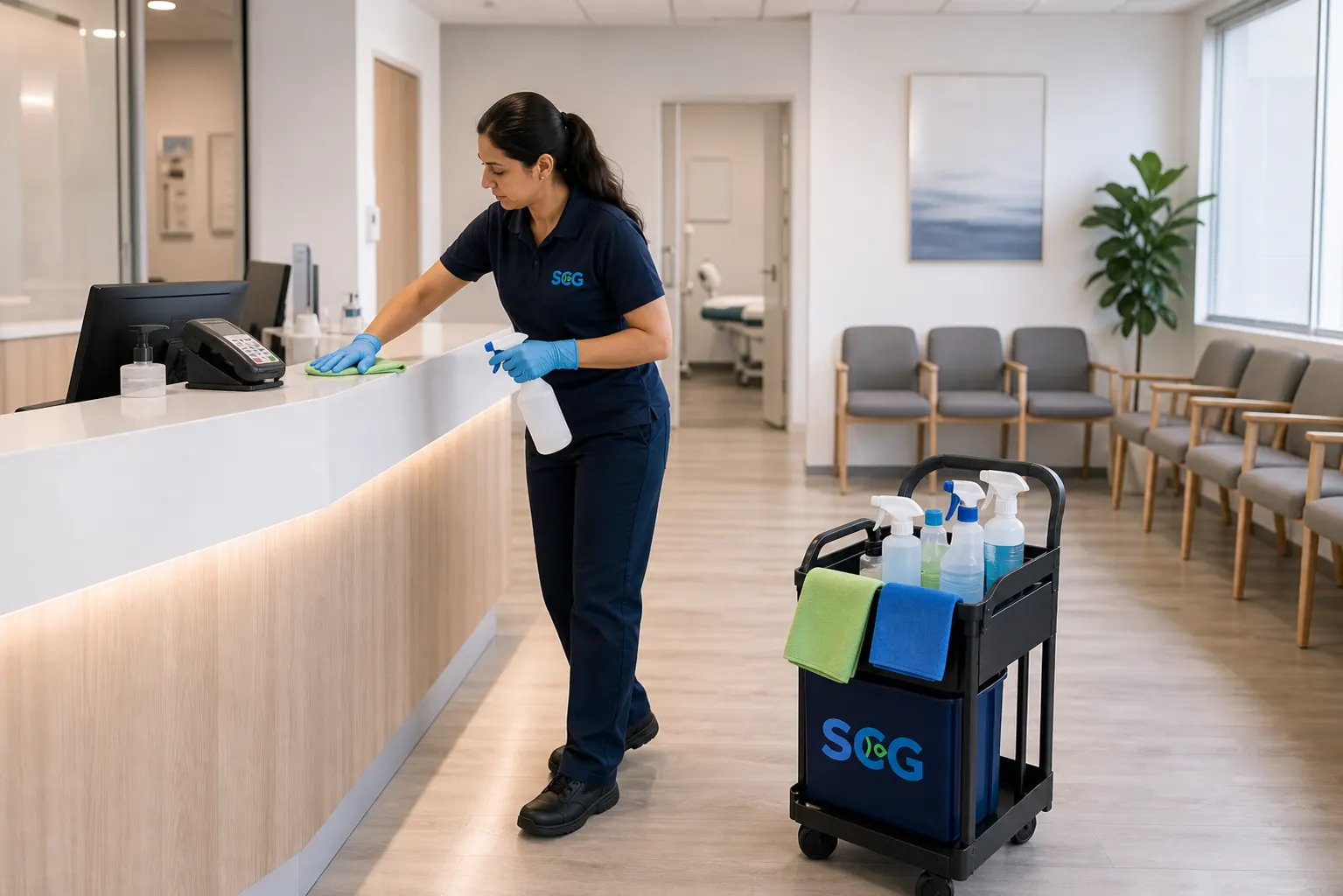
Medical cleaning for Sydney clinics and practices
Sydney Clean Group provides sterile cleaning services and specialised medical cleaning for medical centres, GP and bulk-billing clinics, dental practices, specialist consulting suites and allied health rooms across Greater Sydney, from our base at 77 Garfield Street, Wentworthville NSW 2145. A practice needs a cleaner who understands that a consulting room and a waiting room are two different hygiene problems solved by two different methods.
The defining feature of medical cleaning is that cleaning and disinfection are separate steps performed in that order, with the disinfectant left wet for its full label contact time. A single pass with a combined spray-and-wipe leaves a surface that looks clean and is not disinfected, because the active agent has soil to fight and no time to work.
Around that sits the discipline that makes the rest of it worth doing: colour-coded equipment that never crosses between clinical, general, washroom and kitchen zones, a clear written boundary on clinical waste, and attendance scheduled so no consulting time is lost.
Clinics that also run administrative or retail space can extend the same contract through commercial cleaners in Sydney without adding a second provider.
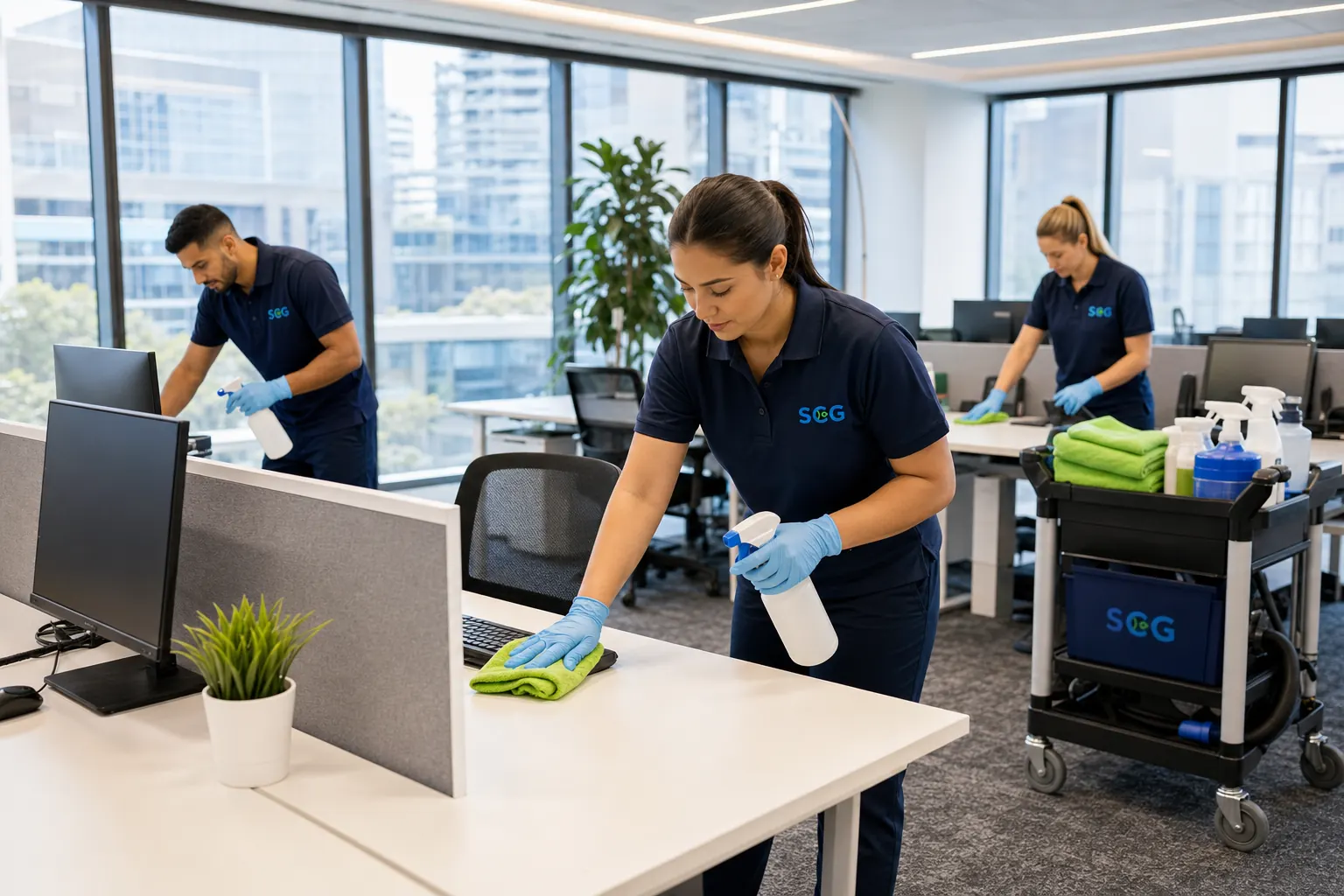
Every area of your facility.
Surface Disinfection
All surfaces — especially frequently touched door handles, chairs, and countertops — thoroughly disinfected with medical-grade products to eliminate pathogens.
Consulting Room Turnaround
Consulting and treatment rooms cleaned to a fixed sequence — couch, trolley, taps, light and door furniture first, floor last — so nothing clean is recontaminated.
Medical Equipment Cleaning
Regular and thorough cleaning of medical equipment — critical to preventing infections and maintaining properly functioning equipment.
Colour-Coded Systems
Separate cloth and mop colours for treatment areas, general areas, washrooms and kitchens, laundered between shifts rather than rinsed and reused across zones.
TGA-Listed Disinfectants
Hospital-grade disinfectants used at label dilution and left for the full label contact time, on surfaces that have been detergent-cleaned first.
Floor Care & Waste Management
Proper maintenance of flooring using methods that clean and disinfect — and compliant waste disposal to meet healthcare regulations.
Why medical facilities trust us.
Enhanced Infection Control
Professional cleaning services handle the stringent sanitisation required in medical environments, reducing the risk of hospital-acquired infections.
Compliance with Health Regulations
Experienced cleaners understand the regulatory landscape and ensure that all cleaning practices adhere to relevant health and safety guidelines.
Improved Patient Satisfaction
A clean medical facility enhances patient confidence and satisfaction, which is crucial for patient care and the facility's reputation.
Focus on Medical Care
By entrusting cleaning responsibilities to experts, medical professionals can focus more on patient care rather than operational details.
Medical cleaning Sydney: clinical standards, not office standards
Medical cleaning in Sydney is separated from general commercial cleaning by one principle: cleaning and disinfection are two different steps, performed in that order, with the disinfectant left on the surface for its full contact time. A single wipe with a combined product looks identical and achieves very little. Every clinical surface we clean is soil-removed first, then disinfected with a TGA-listed product used at label dilution and label dwell time.
Surfaces are classified before the scope is written. High-touch clinical items — examination couches, blood pressure cuffs and stands, treatment trolleys, taps, light handles, door furniture, chair arms in waiting rooms — go on a daily two-stage routine. General surfaces such as floors, skirtings and administrative desks follow a standard detergent clean. Confusing the two is how practices end up over-paying for the wrong work.
A practice also has two distinct contamination profiles under one roof, and pricing a clinic as a single space is the most common reason a medical cleaning contract fails. The clinical zone — consulting rooms, treatment rooms, procedure rooms, the dirty utility and the pathology collection bay — has a low volume of contacts from a small number of people, each of which carries genuine clinical risk. It needs the two-stage detergent-then-disinfectant method with full contact time at every attendance.
The waiting area has the opposite profile: an enormous volume of contacts from people who are, by definition, more likely than the general population to be carrying something. Chair arms, the check-in kiosk and its screen, the reception counter edge, the EFTPOS terminal, the pen at the counter, the door push plate, the water cooler tap, magazine racks and children's play corners are the highest-transmission surfaces in the building — and are almost always the least specified part of a cleaning scope.
We write those zones separately. Clinical surfaces get the full two-stage method at every attendance. Waiting-area touchpoints get a documented touchpoint pass, and in busy centres often a second short pass during the day, because a waiting room cleaned only at 7pm has been reinfected by 9.30am.
Colour-coded equipment and how cross-contamination actually happens
Colour-coding is not a marketing feature; it is the control that stops a cleaner from being the transmission route. Separate cloth and mop colours are allocated to treatment areas, general and waiting areas, washrooms and the staff kitchen, and equipment does not cross between them under any circumstances. Cloths are laundered between shifts rather than rinsed in a bucket and reused, because rinsing redistributes rather than removes.
The failures we find when taking over a practice are almost always sequence failures rather than product failures. A cloth used on a treatment couch then used on the trolley beside it. A mop taken from the washroom into a consulting room. Cleaning the floor before the surfaces, so everything wiped down afterwards falls onto a clean floor. Working from the dirtiest room to the cleanest instead of the reverse.
Every room is cleaned to a fixed sequence: high to low, clean to dirty, surfaces before floors, and the exit is the last thing touched. Cleaners working in clinical areas are trained on standard precautions, on the appropriate personal protective equipment for each zone, and on the blood and body substance spill response before their first shift rather than shown the spill kit after an incident.
Consulting-room turnaround and treatment surfaces
A consulting room turnaround runs in a fixed order. Examination couch and the pillow or headrest first, then the trolley and any equipment stand, then the blood pressure cuff stand, light handle and adjustment controls, then taps, soap and sanitiser dispensers and the paper towel unit, then the desk, keyboard and chair arms, then door furniture at both handle and push-plate height, and the floor last. Couch paper and the bin are changed as part of the same pass rather than as a separate visit.
The surfaces that get missed are the ones you have to bend down or reach up for: the underside edge of the couch, the base of the trolley, the cable runs behind equipment, the top of cabinetry, the skirting behind the door and the wall beside the hand basin, which takes constant splash and is rarely on any checklist. These go on a documented weekly or fortnightly frequency so they are dealt with by schedule rather than by whoever notices.
Certain equipment is off limits and stays off limits. Anything the practice reprocesses, anything with a lumen, sterilisation equipment, autoclave contents and instrument trays are the practice's responsibility under its own reprocessing procedure, and our cleaners do not touch them. That line is written into the scope so there is no ambiguity at 8pm when nobody clinical is in the building.
Clinical waste: the boundary between the practice and the cleaner
Clinical and related waste is handled strictly to the practice's own procedure and existing contractor arrangements, and the boundary is written down before we start. Our cleaners do not open sharps containers, do not decant or consolidate clinical waste, do not replace sharps containers unless the practice has explicitly delegated that task in writing, and do not move clinical waste beyond the point the practice nominates.
What we do handle is the general waste, recycling, confidential paper and cardboard streams, the bins in consulting rooms designated for general waste, and moving sealed clinical waste bags to the practice's nominated holding point where and only where the practice has asked us to. Cleaners are trained on the specific segregation your practice uses at induction, because it varies between practices and assuming is how mistakes happen.
Sharps found loose are never picked up by hand. Our cleaners are instructed to stop, isolate the area and notify the practice contact — and if the practice has authorised it, use the spill and sharps kit with tongs. This is one of the few areas where a slower response is the correct one, and it is worth confirming with any contractor you are considering.
Dental, allied health, day surgery and aged-care adjacent practices
Different practice types carry different pressure points. Dental and orthodontic practices need attention to the surfaces surrounding suction lines, spittoon surrounds, cabinetry seams and the aerosol fallout zone around the chair, which extends further than most cleaners assume — the surfaces two metres from a handpiece matter. Physiotherapy, chiropractic and podiatry need high-frequency plinth, bolster and equipment disinfection because the contact rate per hour is far higher than in a GP room.
Pathology collection centres need sharps-area protocols and spill readiness above everything else. Radiology needs careful equipment-adjacent work without touching the equipment itself. Skin clinics and day surgeries carry procedure-room turnaround requirements and a much tighter expectation on floor and wall finishes. Psychology and counselling practices have the lowest clinical load and the highest expectation on the room feeling calm, private and unmarked.
Practices co-located with or adjacent to aged care and day surgery inherit some of the neighbouring facility's expectations, particularly around respiratory illness periods and visitor screening arrangements. We adjust frequency and touchpoint focus in those buildings rather than running a suburban-clinic scope inside a health precinct.
Compliance documentation and cleaning around patient hours
Documentation is supplied at onboarding and kept current: certificates of currency for public liability and workers compensation, safe work method statements, the product register with safety data sheets for every product we bring on site, the written scope of works with frequencies, and a monthly quality audit against that scope. Practices working through accreditation can use that folder directly as evidence of their cleaning arrangements — it describes what is done, how often, with what, and who verified it.
Most Sydney practices are cleaned after the last patient leaves, anywhere from 5pm in a suburban clinic to 9pm in an extended-hours medical centre. Where a practice runs seven days, we schedule around the lightest session rather than forcing an inconvenient slot, and high-traffic waiting rooms often justify a short midday touchpoint pass in addition to the evening clean.
Periodic work — carpet extraction, hard floor scrubbing and sealing, high dusting, vent and light fitting cleaning and internal glass — is scheduled into weekends or public holidays so no consulting time is lost. Sydney Clean Group is at 77 Garfield Street, Wentworthville NSW 2145. Call 02 9139 8401 for a walk-through of your practice and a written medical cleaning scope and quote.
Medical Centre Cleaning — FAQs.
What is the difference between medical cleaning and normal commercial cleaning?
Medical cleaning separates cleaning from disinfection and performs both in sequence, using TGA-listed disinfectants at label dilution and full contact time, with colour-coded equipment that never crosses between clinical, general, washroom and kitchen zones. A standard commercial clean removes visible soil but does not reliably disinfect, because a combined spray-and-wipe has soil to fight and no dwell time to work in.
Which medical facilities do you clean in Sydney?
We clean GP and bulk-billing clinics, dental and orthodontic practices, specialist consulting suites, physiotherapy, chiropractic and podiatry rooms, psychology and counselling practices, radiology and pathology collection centres, day surgeries and skin clinics, and allied health suites inside larger medical centres.
How do you clean a consulting room properly?
In a fixed sequence, high to low and clean to dirty: examination couch and headrest, then trolley and equipment stands, then blood pressure stand, light handle and controls, then taps and dispensers, then desk, keyboard and chair arms, then door furniture at handle and push-plate height, and the floor last. Couch paper and bins are changed in the same pass.
Do medical cleaners handle clinical waste and sharps?
Clinical and related waste is handled strictly to your practice's own procedure and existing contractor arrangements. Our cleaners do not open sharps containers, do not decant or consolidate clinical waste, and do not replace sharps containers unless your practice has delegated that in writing. Loose sharps are never picked up by hand — the cleaner stops, isolates the area and notifies your contact.
What is colour-coded cleaning and why does a clinic need it?
Colour-coding allocates separate cloth and mop colours to treatment areas, general and waiting areas, washrooms and the staff kitchen so equipment never crosses zones. Cloths are laundered between shifts rather than rinsed and reused. Without it, the cleaner becomes the transmission route — a cloth used on a treatment couch and then a trolley undoes the rest of the process.
How is a waiting room cleaned differently to a consulting room?
A waiting room has an enormous volume of contacts from people more likely to be carrying something. Chair arms, the check-in kiosk and screen, reception counter edge, EFTPOS terminal, counter pen, door push plate, water cooler tap and children's play corner get a documented touchpoint pass — often a second short pass during the day, because a waiting room cleaned only at 7pm is reinfected by mid-morning.
Can you clean outside consulting hours?
Yes. Most Sydney practices are cleaned after the last patient leaves, from around 5pm in a suburban clinic to 9pm in an extended-hours centre. Where a practice runs seven days we schedule around the lightest session. Periodic work such as carpet extraction, floor sealing, high dusting and internal glass goes into weekends or public holidays so no consulting time is lost.
How much does medical centre cleaning cost in Sydney?
Pricing depends on the number of consulting and treatment rooms, waiting room size and traffic, floor types, whether the practice is dental or procedural, and service frequency. We quote from a written scope after a free walk-through of the practice. Call 02 9139 8401 for a tailored quote.
What do sterile cleaning services actually include?
Sterile cleaning services combine a detergent clean with a TGA-listed disinfectant used at label dilution and left for its full contact time, applied in a fixed high-to-low, clean-to-dirty sequence with colour-coded equipment that never crosses between clinical and general zones. It is the two-stage method that separates genuine sterile cleaning from a standard commercial wipe-down, and it is what every consulting and treatment room on our scope receives.
Do you provide specialised medical cleaning for clinics and specialist practices?
Yes. Specialised medical cleaning is scoped to the practice type rather than a generic checklist — dental and orthodontic suites need aerosol-fallout and suction-line attention, physiotherapy and podiatry need high-frequency plinth disinfection, and pathology collection points need sharps-area protocols. We write a specific scope for GP, dental, allied health, radiology and day-surgery practices rather than applying one standard to all of them.
Related Sydney cleaning services.
The full commercial programme behind our medical service.
Child-safe cleaning for long day care and preschools.
Reception, administration and practice manager offices.
Common areas in buildings that house medical suites.
Hot-water extraction for waiting room and corridor carpet.
City specialist suites and tower medical tenancies.
Consulting suite and allied health cleaning for the practices around Hornsby Hospital.
Consulting suite cleaning for the hospital and research precinct around Randwick.
Consulting and allied health suite cleaning for practices near Liverpool Hospital.
Consulting suites and clinics around the Westmead health precinct, covered by our Parramatta commercial cleaning crew.
Get Started Today
Contact us today to schedule a free consultation and discover how our cleaning services can benefit you. Let us handle the cleaning so you can focus on what matters most.