
Commercial Window Cleaning
Sydney.
Commercial window cleaning across Sydney for shopfronts, office glazing, atriums, balustrades and internal glass — on a scheduled frequency rather than when it becomes obvious.
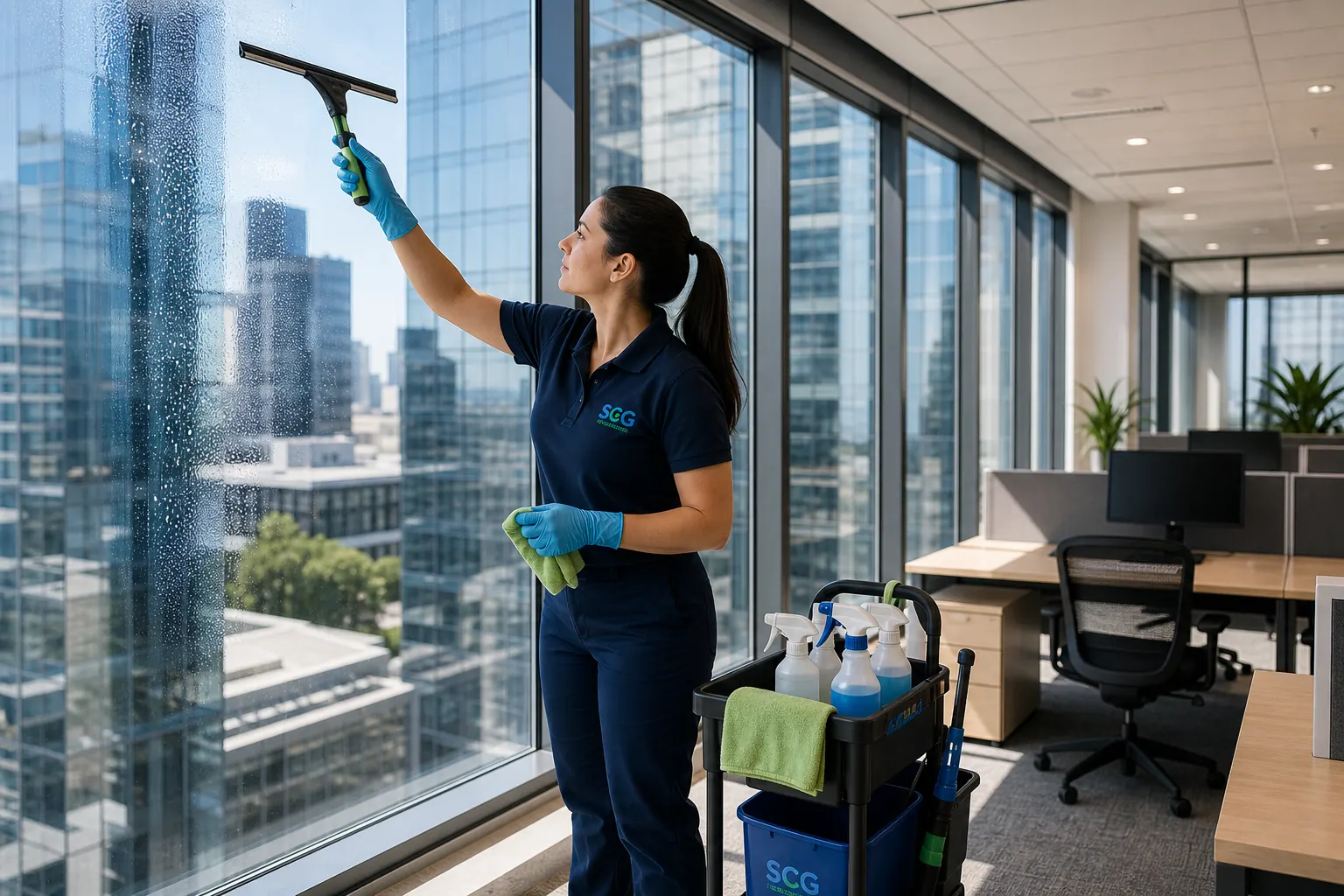
Glass is the first thing that looks neglected.
Nothing ages a commercial building faster in the eye of a visitor than dirty glass. Interior surfaces can be immaculate, but if the entry doors carry hand marks and the ground floor glazing has a salt and dust film, the whole premises reads as poorly run. Glass also degrades gradually, which is why buildings tolerate it far longer than they would tolerate a dirty floor.
We clean commercial glass on a scheduled frequency so it never reaches that point. Ground and low-level glazing is cleaned with purified water-fed pole systems that leave no detergent residue and therefore stay clean longer than a squeegee-and-detergent finish. Higher elevations are handled by qualified height-access operators.
Typical Sydney clients are office buildings and tenancies, retail shopfronts and showrooms, strata foyers and balustrades, medical and childcare premises, schools, and warehouse office frontages. Frequencies range from weekly for a busy shopfront to quarterly or half-yearly for upper-level office glazing.
Most clients bundle glass into a wider programme — see commercial cleaning services across Sydney for how window cleaning sits alongside the daily scope.
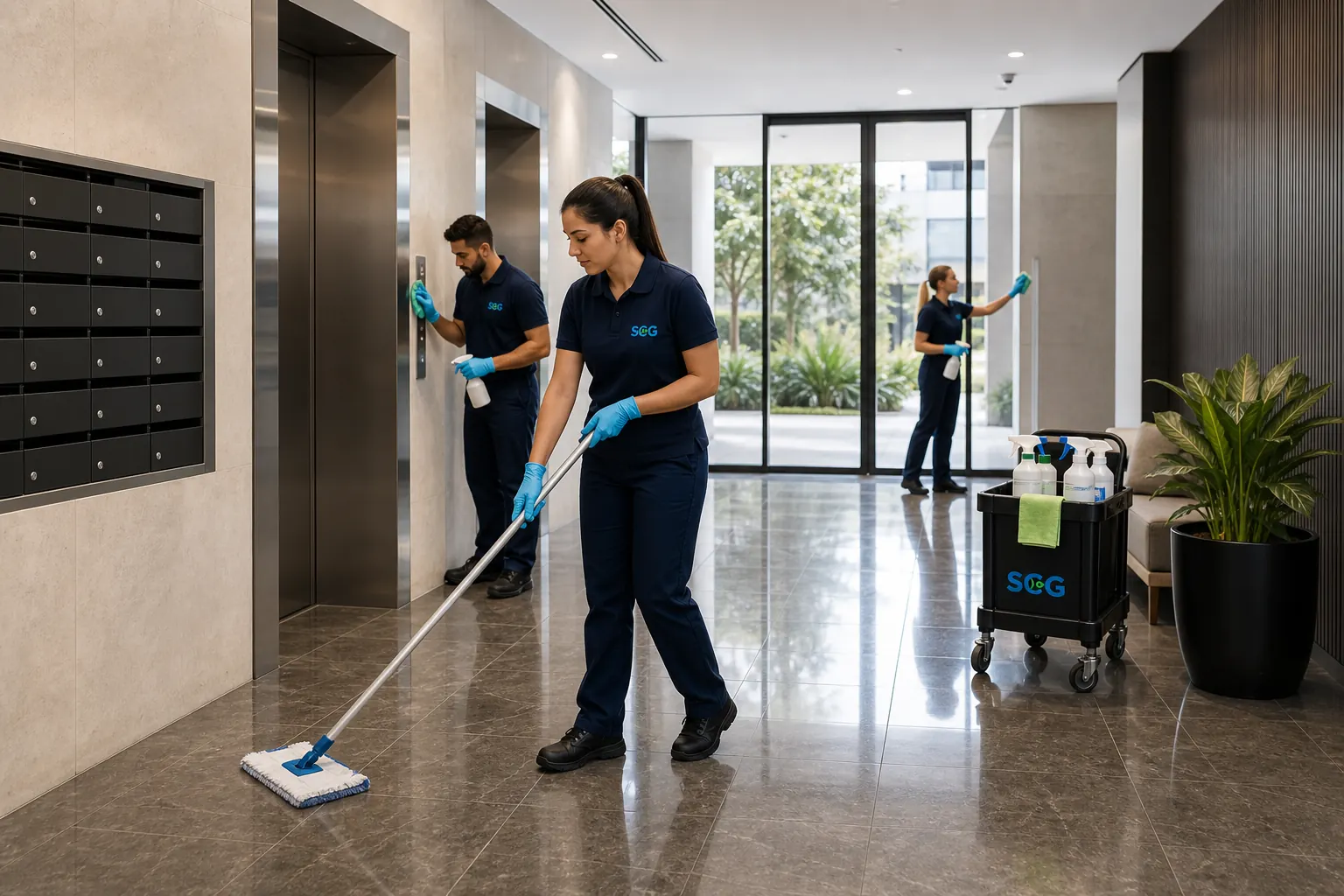
What we clean.
Shopfronts & Entry Glass
Doors, handles, entry glazing and adjacent panels — the highest-visibility glass on any commercial premises.
Office Glazing
Ground and low-level external office windows, plus reachable upper elevations by water-fed pole where the building allows.
Internal Partitions
Glass meeting rooms, partitions, reception screens and internal doors, which mark faster than external glass and are cleaned less often.
Atriums & High Internal Glass
Atrium glazing, void balustrades and high internal panels accessed by pole, platform or rope depending on the building.
Balustrades & Screens
Balcony and stair balustrades, privacy screens and glass awnings for strata buildings and commercial frontages.
Frames, Tracks & Sills
Frames, sills and sliding tracks cleaned with the glass, because clean glass in a dirty frame still reads as dirty.
Why buildings schedule glass with us.
Residue-Free Finish
Purified water leaves no detergent film, so glass dries clear without streaking and stays presentable measurably longer.
Scheduled, Not Reactive
Glass goes on a published frequency alongside the cleaning contract, so it never reaches the point where someone has to complain.
Height Work Documented
Safe work method statements, height-access qualifications and insurance certificates supplied before any elevated work begins.
Bundled With Your Contract
Window cleaning can sit inside your existing cleaning agreement as a separate line item, on one invoice and one point of contact.
Water-fed pole, ladders and rope access
Ground and low-level commercial glass in Sydney is best cleaned with a purified water-fed pole system. The water is filtered to remove dissolved solids, so it dries without spotting and leaves no detergent residue for airborne dust to bind to. The practical result is glass that stays acceptable for longer between visits, which usually lowers the required frequency.
Ladders have a narrow legitimate role and a wide illegitimate one. For most commercial elevations, pole systems reach further and safer, and where they cannot, an elevated work platform or rope access is the correct answer rather than an extended ladder and optimism. Any contractor casually proposing ladder work at height is telling you something important about their safety culture.
Rope access and platform work is performed by qualified operators under a documented safe work method statement, with anchor points verified and the work coordinated with building management for pedestrian exclusion below. High-rise facade work above the reach of these methods is specialist building maintenance unit work and we will say so rather than attempt it.
How often commercial windows should be cleaned in Sydney
Frequency should follow exposure, not habit. A shopfront on a busy Sydney street with heavy pedestrian traffic and vehicle exhaust needs weekly or fortnightly attention on the entry glass to look acceptable. An office tower's upper glazing away from ground-level grime can hold at quarterly or half-yearly.
Coastal buildings are the exception that catches people out. Premises in the eastern beaches, the northern beaches and the harbour foreshore accumulate salt film far faster than inland sites, and salt is corrosive to frames and seals as well as unsightly on glass. Those buildings genuinely need a shorter cycle than an equivalent building in the inner west.
Internal glass is almost universally under-serviced. Meeting room partitions and reception screens collect hand marks within days, and because they are internal they are often excluded from the window scope and forgotten by the daily cleaner. We recommend putting internal glass on a defined frequency inside the daily contract rather than leaving it in the gap between two scopes.
Booking window cleaning across a Sydney portfolio
Clients with several Sydney premises usually want the glass programme aligned across the portfolio: same frequency, same standard, one schedule they can see in advance. We build that as a calendar so facilities teams know which site is being attended in which week rather than fielding individual requests.
Where a building has both accessible and inaccessible glazing, we scope them separately and price them separately. That transparency matters, because bundling the two into a single figure is how buildings end up paying platform rates for glass a pole could reach.
Sydney Clean Group is at 77 Garfield Street, Wentworthville NSW 2145. Call 02 9139 8401 for a glass survey and a written window cleaning schedule.
Water-fed pole versus traditional squeegee cleaning
The traditional squeegee-and-detergent method still has a place — it is fast on small, easily reached panes and it is the standard method for internal glass, where trailing a water hose is impractical and the surface is close at hand. A skilled squeegee operator on internal partitions and reception glass gets a streak-free finish in a fraction of the time a pole system would take indoors.
Water-fed pole comes into its own outdoors on ground and low-level external glazing, particularly where there is a lot of glass to cover or where access is awkward — above garden beds, over water features, or where a ladder would be needed for a squeegee finish. Because the water carries no detergent, there is nothing left behind to attract dust, which is the main reason pole-cleaned glass stays visibly cleaner for longer between visits than a squeegee finish on the same elevation.
In practice most Sydney commercial sites use both: squeegee for internal glass and reachable frontages, pole for external elevations beyond comfortable ladder height. We choose per pane rather than committing a whole site to one method, because the wrong method on the wrong glass either wastes time or leaves a worse finish than the alternative would have.
Atriums, internal partitions and high internal glass
Internal glass behaves differently to external glass and is judged more harshly, because there is no wind or rain to explain a mark and a fingerprint on a meeting room partition is visible from across an open-plan floor. Atrium glazing and void balustrades add height and access difficulty to that visibility problem — the glass a visitor notices most on arrival is often the hardest for a daily cleaner to reach safely.
We scope atrium and high internal glass separately from the daily internal glass service, because it usually needs a platform, a pole, or in some buildings a documented rope access plan, and it is scheduled on its own frequency rather than folded into the nightly clean. Void safety is treated the same way it would be for any elevated work — barricading, spotting, and coordination with building management for foot traffic below.
Reception screens and meeting room glass, by contrast, need frequent attention precisely because they are at hand height and get touched constantly. We recommend these sit on a defined daily or several-times-weekly frequency inside the core cleaning contract rather than waiting for the periodic glass programme to reach them.
Building a facade glass survey and access plan
Before quoting a building with more than a simple shopfront, we walk the facade and produce a written glass survey: every elevation, the access method available to it, the frequency it warrants, and which panes are genuinely accessible versus which require specialist equipment. That survey becomes the pricing basis, so the quote reflects what is actually on the building rather than a rough estimate from the street.
The access plan that comes out of the survey also protects the client from a common failure mode — a contractor who quotes cheap on the assumption that difficult glass will simply be skipped. Our survey lists every pane, so nothing is quietly left out of scope.
For strata and commercial buildings, the survey and access plan is kept on file and re-checked periodically, because access changes — a new garden bed under a previously reachable window, a fence line moved, an awning added — can turn a simple pole job into one that needs a platform.
Commercial Window Cleaning Sydney — FAQs.
How often should commercial windows be cleaned in Sydney?
It depends on exposure. Busy street-level shopfronts usually need weekly or fortnightly attention on entry glass, while upper-level office glazing often holds at quarterly or half-yearly. Coastal buildings in the eastern and northern beaches need a shorter cycle because salt film builds far faster.
What is water-fed pole cleaning?
It uses water filtered to remove dissolved solids, applied through a brush on an extending pole. Because there is no detergent residue left behind, the glass dries clear without streaking and stays presentable longer than a traditional squeegee and detergent finish.
Do you clean high-rise glass?
We clean up to the height our pole systems, elevated work platforms and rope access operators can safely reach, under a documented safe work method statement. Facade glass above that range is specialist building maintenance unit work and we will tell you rather than attempt it.
Do you clean frames, sills and tracks?
Yes. Frames, sills and sliding tracks are cleaned along with the glass, because clean glass sitting in a dirty frame still reads as dirty to anyone looking at the building.
Can window cleaning be added to our existing cleaning contract?
Yes. Window cleaning is commonly added as a separate line item inside an existing commercial cleaning agreement, so you keep one invoice and one point of contact while the glass runs on its own published frequency.
How much does commercial window cleaning cost in Sydney?
Price is driven by the number and size of panes, the access method required, the amount of internal glass, and the frequency. Accessible and inaccessible glazing are scoped and priced separately so you are not paying platform rates for glass a pole can reach.
Do you use squeegees or only water-fed poles?
Both, chosen per pane. Squeegee cleaning is used for internal glass and easily reached frontages, while water-fed pole is used on external elevations beyond comfortable ladder height, because it leaves no detergent residue and stays clean for longer.
Related commercial services.
The full commercial programme glass usually sits inside.
Shopfront presentation and daily entry glass.
Foyer glass, balustrades and common property glazing.
Internal partitions and meeting room glass in the daily scope.
Builders film and paint speck removal from new glazing.
City tenancy glass and ground-floor frontages.
Get a commercial window cleaning schedule.
Free glass survey across your Sydney premises, with accessible and access-restricted glazing scoped and priced separately.