
Gym Floor Cleaning
Sydney.
A surface-by-surface guide to gym flooring specifically — rubber tile and rolled rubber, vinyl sports surfaces, sprung timber and turf strips — what damages each one, and why the wrong product ruins a floor faster than traffic ever does.
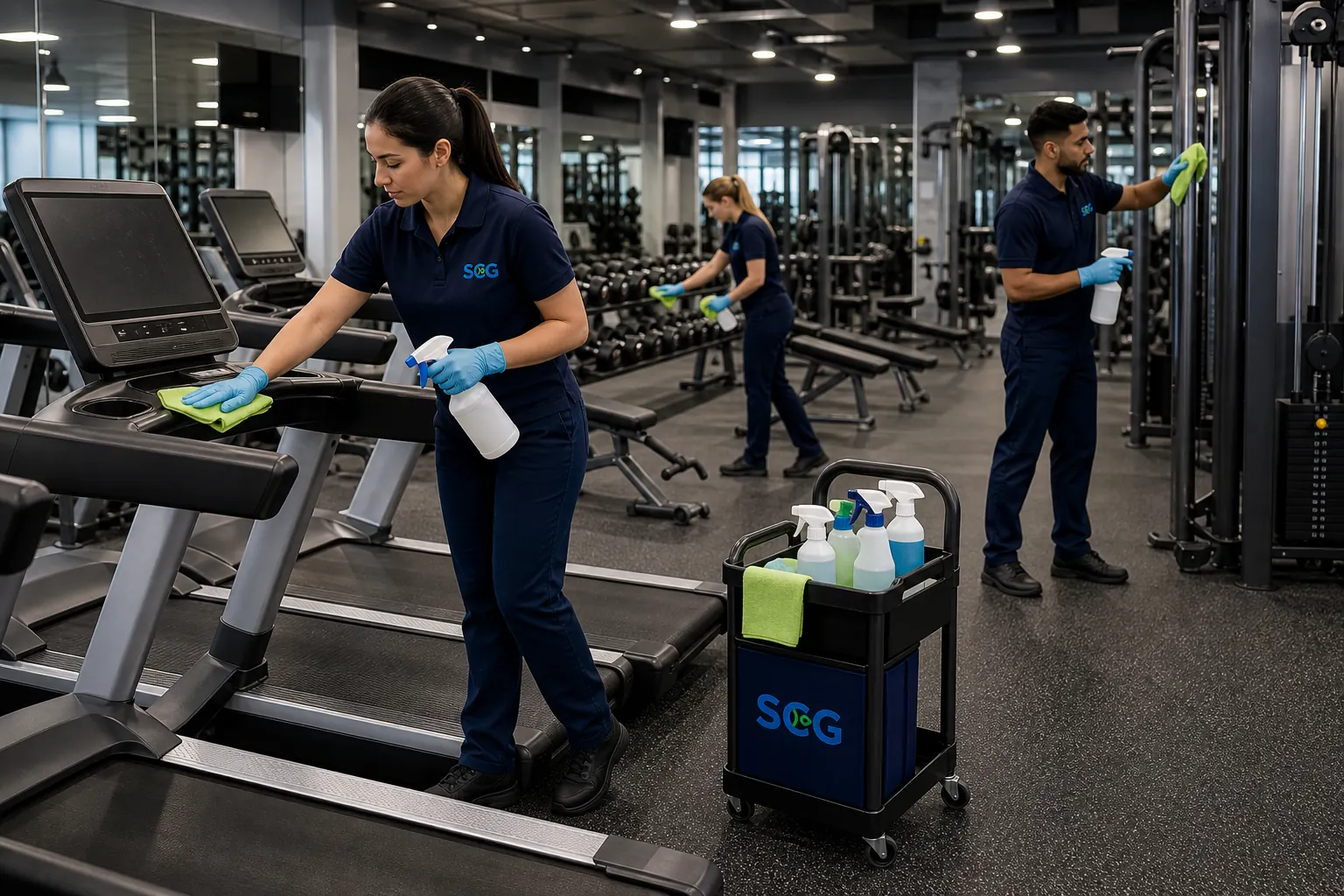
This page is about the floor, not the whole gym.
Our general gym cleaning service covers the whole facility — equipment sanitising, change rooms, showers, air quality and reception. This page goes deep on one part of that: the flooring itself, because gym floors are a genuinely specialised surface category and the wrong cleaning method is the single most common way a gym floor gets damaged ahead of its expected life.
A gym floor is rarely one surface. A typical facility runs rubber tile or rolled rubber matting across the free-weight area, vinyl sports flooring in a studio or basketball court, sprung timber in a dedicated studio or dance space, and turf strips for sled pushes and drags — often all in the same building, sometimes in adjoining rooms with a hard boundary between them. Each of those materials fails in a different way and needs a different cleaning approach.
The daily mop-and-go that keeps a floor looking presentable is not the same job as the periodic deep scrub that actually removes what's ground into the surface, and treating them as interchangeable is how gym floors end up looking tired years before they should.
For equipment sanitising, change rooms, showers and the rest of the facility, see the complete gym and fitness centre service, which this flooring programme is usually booked alongside.
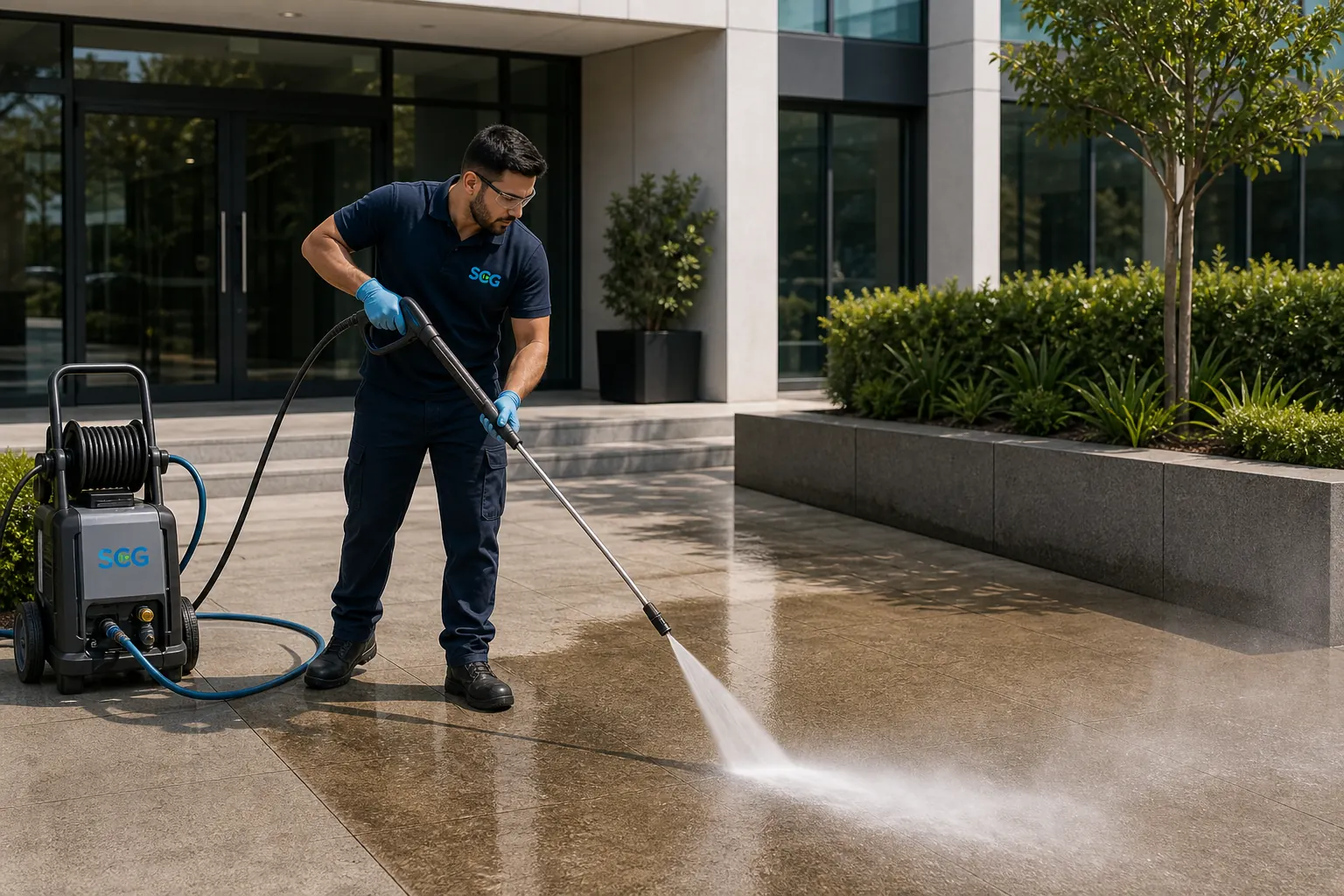
Gym flooring, surface by surface.
Rubber Tile & Rolled Rubber
Free-weight area flooring cleaned with neutral-pH product and controlled moisture, protecting the surface from chemical breakdown.
Vinyl Sports Flooring
Studio and court vinyl cleaned and maintained to hold its finish and grip rating under repeated impact and pivot movement.
Sprung Timber Floors
Studio and dance floor timber cleaned with minimal water and a finish-safe product, preserving the sprung system underneath.
Turf Strips
Sled and drag turf lanes extracted rather than mopped, removing the grit that mopping simply redistributes into the pile.
Seam & Joint Cleaning
The gaps between rubber tiles, where sweat, bacteria and grit concentrate well beyond what surface mopping reaches.
Periodic Deep Scrubbing
Mechanical scrubbing that lifts what daily mopping only redistributes, scheduled separately from the daily maintenance pass.
Why gym operators use a floor-specific service.
We Know What Damages Each Surface
The wrong pH or the wrong pad on the wrong floor causes damage that a generic commercial cleaner won't recognise until it's done.
Daily And Periodic Both Covered
A maintenance mop that keeps the floor presentable, and a separate scheduled deep scrub that actually removes ground-in soil.
Correct Equipment For Each Surface
Auto-scrubbers, extraction units and finish-safe applicators matched to rubber, vinyl, timber and turf respectively.
Protects A Significant Capital Investment
Gym flooring is expensive to replace — the right cleaning programme extends its usable life measurably.
Rubber flooring: durable against impact, fragile against chemistry
Rubber tile and rolled rubber matting handle dropped weights and constant foot traffic extremely well, which is exactly why they dominate free-weight areas — but they're chemically fussy in a way their physical toughness doesn't suggest. High-pH strippers and solvent-based cleaners break down the rubber's surface over repeated use, leaving it tacky, chalky or visibly faded well before the material's structural life is over. A neutral-pH cleaner, roughly pH 6 to 8, applied with a soft-pad auto-scrubber and controlled moisture is the combination that holds a rubber floor's finish over years rather than months.
The part of a rubber floor that gets missed most is the seam between tiles. Sweat, skin oils, chalk and fine rubber dust work their way into these gaps and become a genuine bacterial reservoir that surface mopping never reaches, since a mop passes over the gap rather than into it. Periodic seam cleaning with a narrow tool or a scrubber attachment designed for grout lines addresses this directly, and it's worth doing on its own schedule separate from the general floor clean.
Why the wrong pH strips rubber — the chemistry in plain terms
Rubber flooring is a polymer, and polymers degrade when exposed to chemistry outside their tolerance range over repeated contact. High-alkaline strippers, designed to cut through wax and heavy grease on resilient flooring like vinyl, are far too aggressive for rubber's surface chemistry — they attack the plasticisers and bonding agents that keep the rubber flexible and bonded to its backing, which is what produces the tacky or chalky surface operators eventually notice.
This is also why chalk dust matters more on rubber than it looks like it should. Chalk is itself mildly abrasive, and left to grind underfoot between cleans, it dulls the rubber's surface finish and accelerates the exact wear pattern a neutral-pH cleaning programme is designed to prevent. Regular mechanical scrubbing removes the chalk layer that damp-mopping alone just redistributes across the same floor.
Sprung timber floors: minimal water, correct finish
A sprung timber floor — common in dance studios and some group fitness rooms — sits on a system of resilient supports beneath the timber surface, designed to absorb impact and reduce injury risk during jumping and repetitive movement. Cleaning it with excess water risks moisture reaching the timber's underside and the sprung mechanism itself, which can cause warping, swelling or a loss of the floor's designed give over time.
The correct approach uses minimal water — a damp mop rather than a wet one — and a cleaning product specifically compatible with the floor's factory finish, since the wrong product can strip a protective coating meant to last years and expose bare timber to moisture damage well before the coating's intended life is up.
Vinyl sports flooring and turf strips
Vinyl sports flooring used in studios and multi-purpose courts is more chemically tolerant than rubber but still needs a maintained finish to hold its grip rating — a floor that's too slick from wax build-up or too stripped-back from over-aggressive cleaning both create a genuine injury risk during pivoting and lateral movement. Cleaning schedules should match the manufacturer's finish system rather than a generic commercial vinyl programme, since gym vinyl typically carries a different grip specification to a corridor or retail vinyl floor.
Turf strips used for sled pushes and drags trap grit and rubber particulate deep in the pile in a way that mopping cannot address at all — mopping simply pushes moisture through turf without lifting anything out. These need extraction, the same principle used in carpet cleaning, to actually pull embedded grit and debris out of the turf backing rather than leaving it to work against the fibres underfoot.
Daily maintenance versus periodic deep scrubbing
A daily damp-mop or auto-scrubber pass keeps a gym floor presentable and removes surface-level soil, sweat and dust — but it does not remove what has already been ground into the surface texture of rubber or the seams between tiles. That requires a separate, periodic deep scrub using a mechanical scrubber with the correct pad and dwell time, typically monthly to quarterly depending on how heavily the area is used.
Treating the daily pass as sufficient on its own is the most common reason gym floors look tired years before they should — the surface accumulates a fine layer that daily mopping simply moves around rather than removes, and it only becomes visible once it's already established. Sydney Clean Group is based at 77 Garfield Street, Wentworthville NSW 2145 and services gyms and fitness facilities across Greater Sydney. Call 02 9139 8401 for a floor-specific cleaning programme.
Gym Floor Cleaning Sydney — FAQs.
What's the difference between this page and your gym cleaning service?
Gym cleaning covers the whole facility — equipment, change rooms, showers and air quality. This page is specifically about the flooring itself: rubber, vinyl, timber and turf, and the surface-specific methods each one needs.
Why does the wrong pH damage rubber gym flooring?
High-alkaline strippers and solvent-based cleaners attack the plasticisers and bonding agents in rubber's polymer structure, leaving the surface tacky, chalky or faded. A neutral-pH cleaner around pH 6 to 8 holds the rubber's finish over years instead of months.
Do you clean the seams between rubber floor tiles?
Yes. Sweat, skin oils, chalk and fine rubber dust concentrate in the seams between tiles well beyond what surface mopping reaches, and periodic seam cleaning addresses that reservoir directly.
Can you clean sprung timber studio floors?
Yes, with minimal water and a finish-safe product matched to the floor's factory coating. Excess water risks reaching the timber's underside and the sprung support system, which can cause warping over time.
How do you clean turf strips used for sled training?
By extraction rather than mopping. Turf traps grit and rubber particulate deep in the pile, and mopping only pushes moisture through it without lifting anything out — extraction actually removes embedded debris.
How often should a gym floor get a deep scrub, not just a daily mop?
Monthly to quarterly depending on traffic, on top of a daily maintenance pass. Daily mopping keeps a floor presentable but doesn't remove soil already ground into the surface, which is what a periodic mechanical scrub is for.
What drives the cost of a gym floor cleaning programme?
Floor area, the mix of surfaces present (rubber, vinyl, timber, turf each need different equipment and chemistry), and whether you need daily maintenance, periodic deep scrubbing, or both. Call 02 9139 8401 for a scoped quote.
Related fitness and facility cleaning.
Local gym and studio cleaning teams across Sydney.
Get a scoped quote across your wider commercial premises.
Front-of-house presentation for fitness retail and studio spaces.
Where similar sports-surface principles apply in a school setting.
Get a gym floor cleaning programme matched to your surfaces.
Rubber, vinyl, timber or turf — cleaned with the chemistry and equipment each surface actually needs.