
Dental Clinic Cleaning
Sydney.
Cleaning for Sydney dental and orthodontic practices — surgery and waiting room cleaning around your patient list, with a clear line between our scope and instrument reprocessing.
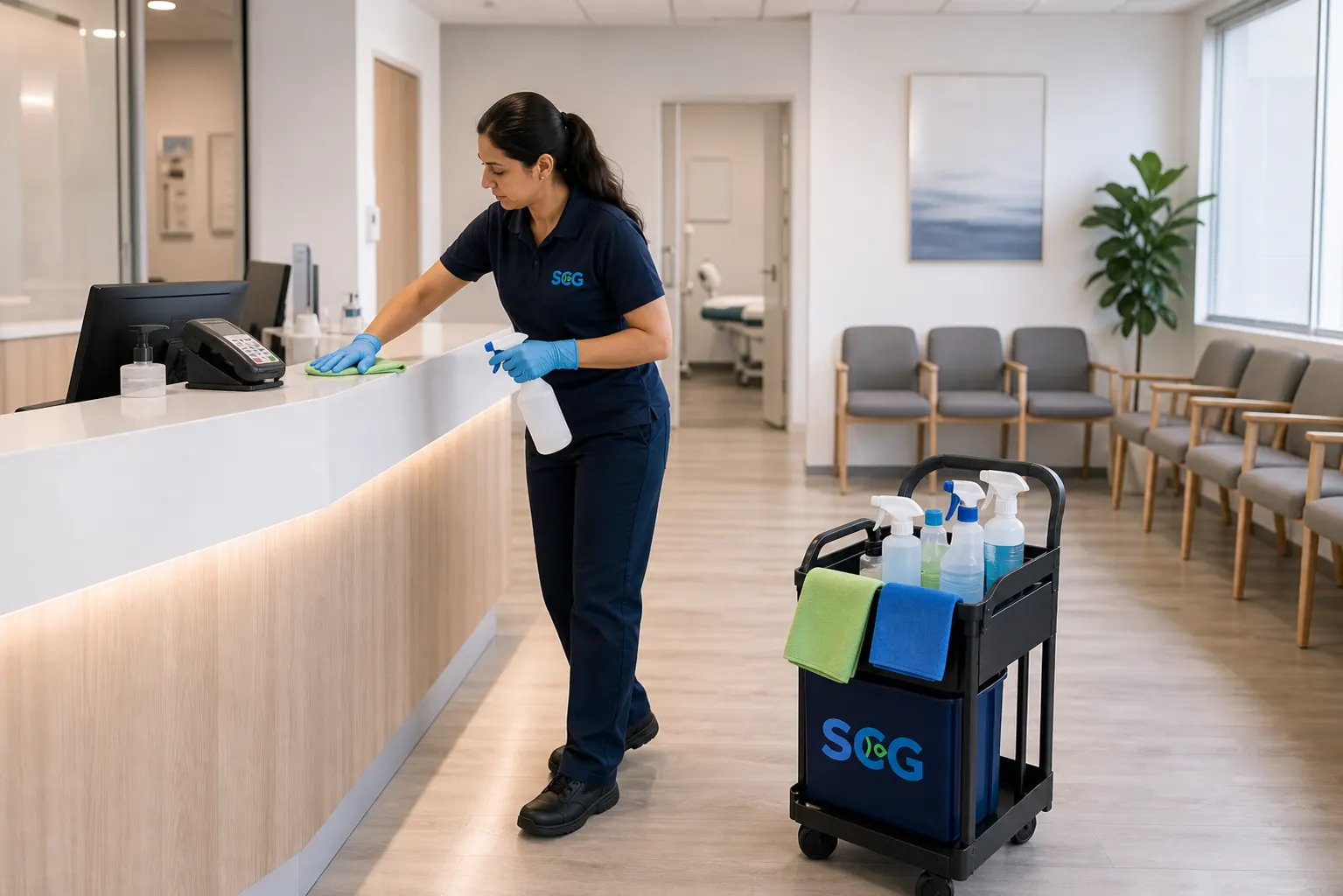
Two contamination profiles under one roof
Sydney Clean Group cleans dental and orthodontic practices across Greater Sydney from our base at 77 Garfield Street, Wentworthville NSW 2145. A dental practice has two genuinely different contamination profiles that a single cleaning scope shouldn't treat the same way: the surgery, where aerosol from handpieces and suction lines settles well beyond the chair, and the waiting room, where the highest volume of general patient contact happens.
The clearest boundary in dental cleaning is what the practice's own team reprocesses versus what a cleaner handles. Instruments, handpieces and anything that goes through the practice's sterilisation process stay entirely with the practice's own clinical staff under their own reprocessing procedure. Our scope covers general cleaning of the surgery, waiting room, reception and staff areas, and floors — never the instruments, sterilisation equipment or clinical reprocessing workflow itself.
We schedule around your patient list, cleaning between patients where a practice needs it and running the full surgery and waiting room clean after the last patient of the day.
For practices that also run wider allied health or GP suites, see our broader medical centre cleaning programme for a scope covering the full building.
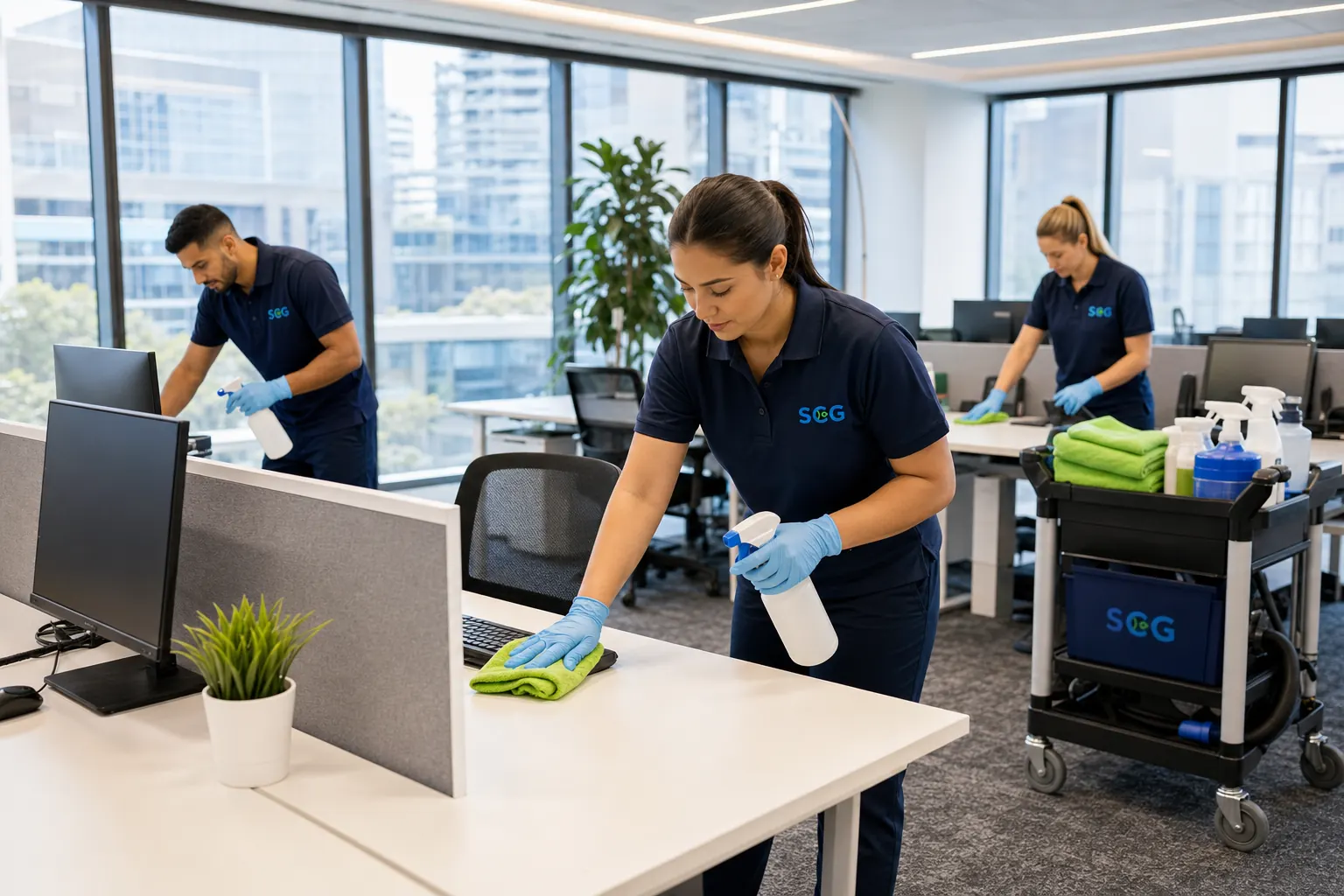
What our scope covers.
Surgery Floors & Surfaces
Surgery floors and non-clinical surfaces cleaned around the chair, with attention to the aerosol fallout zone that extends beyond the immediate treatment area.
Waiting Room & Reception
Chairs, reception counter, EFTPOS terminal, magazine racks and children's areas — the highest general-contact surfaces in the practice — cleaned on a documented touchpoint pass.
Cabinetry & Non-Clinical Surfaces
Cabinet exteriors, benchtops outside the sterile field, taps, light handles and door furniture cleaned and disinfected to a two-stage method.
Staff Areas & Amenities
Staff kitchen, bathrooms and back-of-house areas cleaned to a standard commercial scope, separated from clinical zones.
General Waste & Recycling
General office and kitchen waste and recycling collected under our scope, kept entirely separate from clinical and sharps waste streams.
Scheduling Around Patient Lists
Cleaning windows built around your appointment book, including between-patient touch-ups where a practice needs them.
Why practices choose us.
Clear Reprocessing Boundary
We never touch instruments, handpieces or anything in your sterilisation workflow — that stays entirely with your own clinical team.
Understands Aerosol Fallout
Surgery cleaning accounts for aerosol settling beyond the immediate chair area, not just the obvious treatment surfaces.
Waiting Room Given Real Priority
The highest-contact area in the practice gets a documented touchpoint pass, not folded into a general end-of-day tidy.
Fully Insured, Trained Staff
Cleaners trained on dental-specific protocols at induction and covered by public liability insurance for every visit.
Surgery cleaning and the aerosol fallout zone
Dental handpieces and suction lines generate aerosol that settles on surfaces well beyond the immediate chair area — cabinetry, wall surfaces, light fittings and equipment two metres or more from the treatment zone can all carry fallout that a cleaning scope focused only on the chair and bracket table will miss. Our surgery cleaning accounts for this wider footprint, extending the two-stage clean-then-disinfect method to the surfaces aerosol actually reaches, not just the ones immediately obvious to someone standing at the door.
Chair upholstery, light handles, bracket table surfaces, taps and door furniture are cleaned and disinfected in sequence — soil removed first, then a disinfectant applied and left for its label contact time — the same principle used in any clinical environment, adapted to the specific fallout pattern a dental surgery produces.
What we clean and what stays with your clinical team
The clearest and most important boundary in dental cleaning is instrument reprocessing. Handpieces, instruments, sterilisation equipment and anything that goes through your practice's own sterilisation cycle are never touched by our cleaners under any circumstances — that entire workflow, from decontamination through to sterilisation and storage, is owned by your clinical team under your own infection control procedures.
What we clean is everything around that workflow: the surgery floor and non-instrument surfaces, cabinetry exteriors, benchtops outside the sterile field, and the general environment the clinical work happens in. This split is written into the scope from the first walk-through so there's no ambiguity about where our work stops and your team's clinical procedures begin.
Waiting rooms carry the highest general-contact load
A dental waiting room sees a high volume of contact from a broad patient base, much of it in a confined seating area with shared touchpoints — chair arms, the reception counter edge, the EFTPOS terminal, the check-in pen, magazine racks and any children's play corner. These get a documented touchpoint pass separate from the general floor and surface round, because a waiting room cleaned only at the end of the day accumulates contact risk throughout a full day of appointments.
For busier practices, a short midday touchpoint pass on the waiting room alongside the end-of-day clean addresses this more directly than a single evening visit can.
Reception, floors and shared touchpoints
Reception counters, the practice management terminal area, and any shared administrative equipment are cleaned to the same two-stage principle as clinical surfaces where practical, given how frequently they're touched across a full patient list. Floors throughout the practice — surgery, corridor and waiting room — are cleaned last in the sequence in each room, after surfaces, so nothing clean falls onto a floor that's about to be disturbed again.
Staff kitchens and bathrooms are kept to a standard commercial cleaning scope and kept entirely separate — different cloth and equipment colours — from clinical and waiting room zones.
Waste boundaries and scheduling around patient lists
Clinical and sharps waste streams are handled strictly to your practice's own procedure and existing contractor arrangements. Our cleaners do not open sharps containers, do not handle clinical waste beyond a point your practice explicitly nominates, and do not decant or consolidate any regulated waste stream. General office, kitchen and waiting room waste and recycling are collected under our own scope.
Most Sydney dental practices are cleaned after the last patient of the day, though some practices ask for a short between-patient touch-up on the surgery during a heavy list — we build the schedule around your actual appointment book rather than a fixed time slot. Sydney Clean Group is based at 77 Garfield Street, Wentworthville NSW 2145. Call 02 9139 8401 to arrange a walk-through and a written dental cleaning scope.
Dental Clinic Cleaning Sydney — FAQs.
Do you clean or sterilise dental instruments?
No, never. Instruments, handpieces and anything in your sterilisation workflow stay entirely with your own clinical team under your practice's infection control procedures. Our scope covers general cleaning of the surgery, waiting room and practice environment, not clinical reprocessing.
How do you handle aerosol fallout from handpieces?
We extend the two-stage clean-then-disinfect method to surfaces beyond the immediate chair area — cabinetry, walls and equipment within the fallout zone — rather than limiting the scope to the chair and bracket table alone.
How is dental cleaning different to general medical centre cleaning?
Dental cleaning is scoped specifically around aerosol fallout from handpieces and suction lines, and the reprocessing boundary is more explicit given the volume of instruments involved. Practices running wider GP or allied health suites alongside a dental surgery can extend into our broader medical centre cleaning scope.
Do you handle sharps and clinical waste?
No. Clinical and sharps waste stay strictly with your practice's own procedure and existing contractor arrangements. We collect general office, kitchen and waiting room waste and recycling only.
Can you clean between patients during a busy list?
Yes, some practices ask for a short surgery touch-up between patients during a heavy list, in addition to the full end-of-day clean. This is agreed and built into the scope upfront.
How do you prioritise the waiting room?
The waiting room gets its own documented touchpoint pass — chair arms, reception counter, EFTPOS terminal, magazine racks and children's areas — separate from the general floor round, since it carries the highest general-contact load in the practice.
How much does dental clinic cleaning cost in Sydney?
Pricing depends on the number of surgeries, waiting room size, patient volume and service frequency. We quote from a written scope after a practice walk-through. Call 02 9139 8401 for a tailored quote.
Related Sydney cleaning services.
For dental practices inside a shared medical or commercial building.
Administration and practice manager offices attached to the surgery.
Get a written scope built around your surgeries and patient list.
Periodic carpet extraction for waiting room and corridor flooring.
Get Started Today
Contact us for a practice walk-through and a written dental clinic cleaning scope with clearly defined boundaries.