
Commercial Kitchen Cleaning
Sydney.
General back-of-house food-service cleaning for Sydney kitchens — floors, drains, degreasing, stainless surfaces, cool room exteriors and bin areas — with a clear line drawn to the specialist exhaust cleaning trade we don't perform.
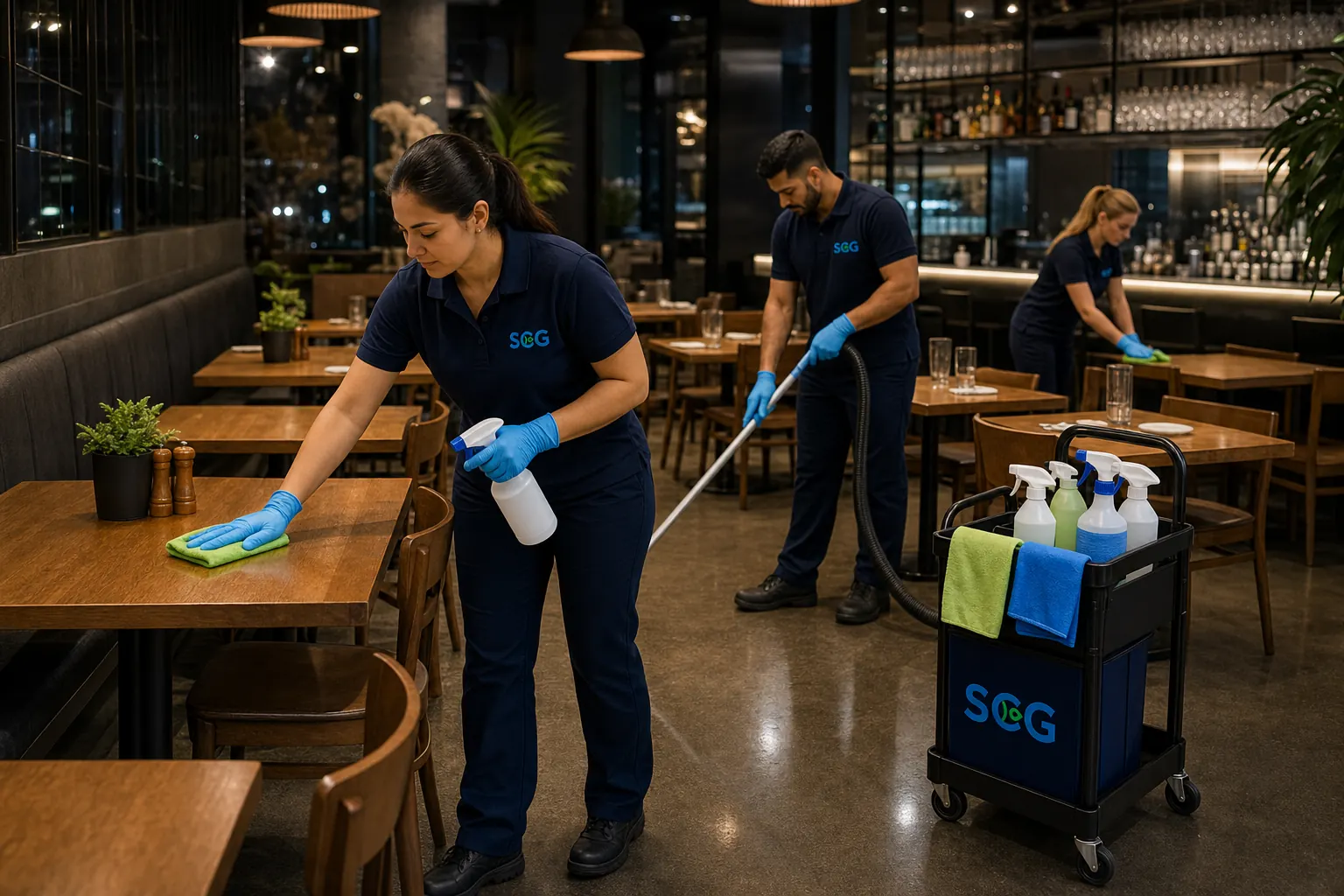
What a general cleaner does in a commercial kitchen — and what we don't do.
Commercial kitchen cleaning as covered on this page is general back-of-house cleaning: floors, drains, walls, stainless benches and equipment exteriors, cool room exteriors, and bin and waste areas. It's the work that happens around service — before opening, after close, or during a scheduled deep clean — carried out by a general commercial cleaning contractor rather than a food handler.
It is deliberately not the same trade as kitchen exhaust and canopy cleaning. Cleaning the inside of extraction ductwork, canopy filters and exhaust risers to remove grease build-up is specialist work governed by Australian Standard AS1851 for fire safety, and it's typically performed by a licensed exhaust cleaning contractor who can certify the clean for insurance and fire-safety compliance. We're upfront about that boundary because conflating the two trades is a genuine safety issue, not just a marketing distinction — grease in an uncleaned duct is a serious fire risk, and it needs a contractor qualified in that specific standard.
Where our service fits is everything else that keeps a kitchen's surfaces, floors and drainage genuinely clean between the operator's own daily food-safety routines — which remain the kitchen's responsibility under the Food Standards Code regardless of who cleans the floors.
For a broader commercial cleaning arrangement covering front-of-house dining and other areas of a hospitality site, a wider commercial cleaning programme for hospitality sites covers the full scope.
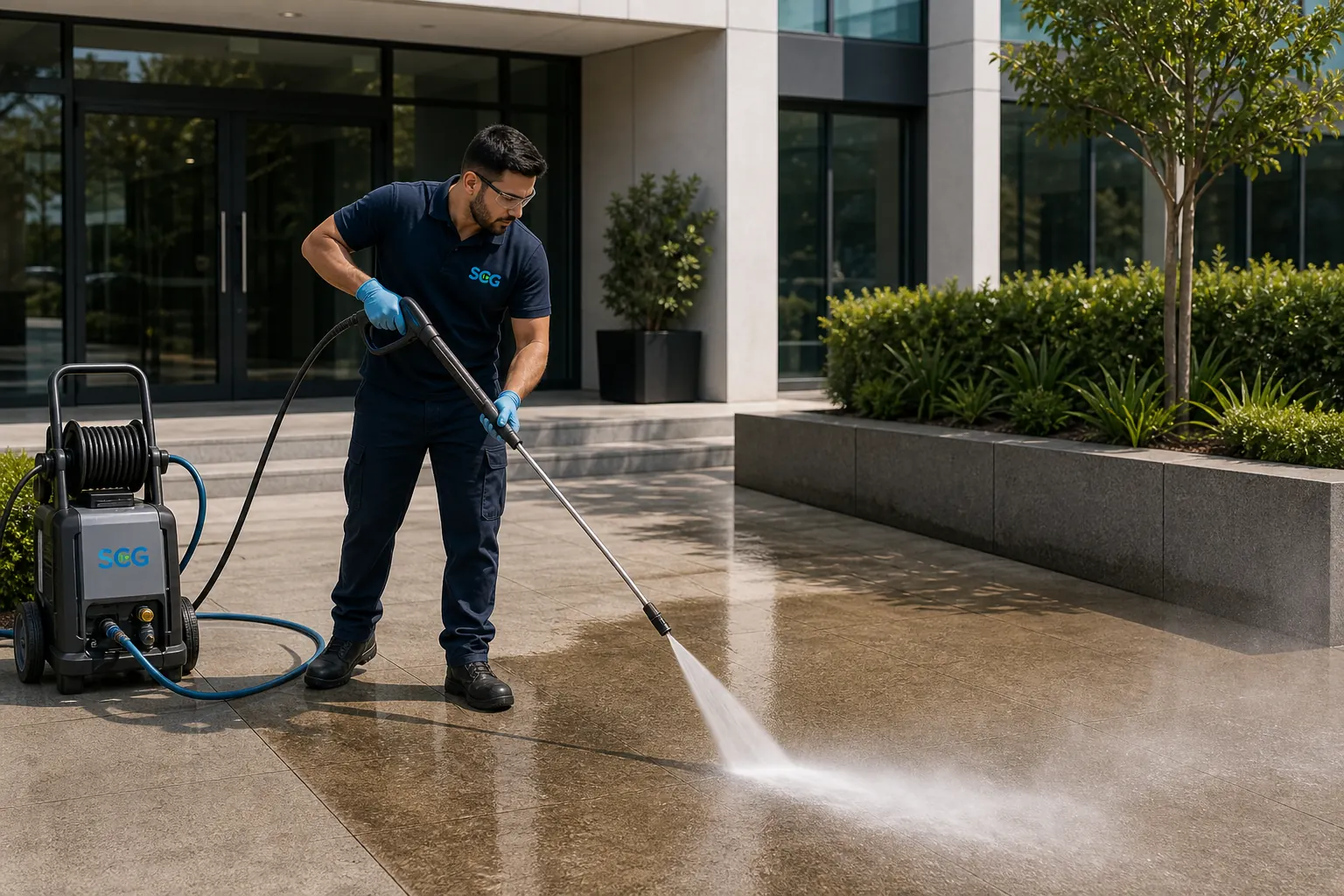
What our commercial kitchen clean covers.
Floors & Drains
Degreasing and scrubbing of kitchen floors and floor drains, where grease and food residue build up fastest and become genuinely slip-hazardous.
Degreasing Of Surfaces
Wall surfaces, splashbacks and equipment exteriors near cooking lines, cutting through grease film that daily wiping alone doesn't remove.
Stainless Steel Benches & Equipment
Benchtops, prep tables and the exteriors of ovens, fryers and stovetops cleaned and polished without abrasive damage to the finish.
Cool Room Exteriors
External surfaces, door seals and handles of cool rooms and fridges kept clean, distinct from any internal food-storage responsibility.
Bin & Waste Areas
Internal and external waste areas cleaned and deodorised on a schedule that keeps pest activity and odour under control.
Wall & Ceiling Surfaces
Tiled and washable wall surfaces and low ceiling areas near cooking equipment, addressing grease that migrates upward over time.
Why Sydney food-service operators use us for back of house.
We Know The Boundary
A clear, honest distinction between general kitchen cleaning and licensed exhaust work, so you know exactly what's covered.
Scheduled Around Service
Deep cleans timed to close-of-trade, early morning, or a full shutdown day depending on your kitchen's hours.
Correct Chemistry For Stainless
Degreasers and finishes matched to stainless steel, avoiding the streaking and dulling that generic cleaners cause.
Documentation Provided
Certificates of currency and a service record you can hold alongside your own food-safety documentation if requested.
Floors, drains and the slip-hazard problem
Commercial kitchen floors accumulate grease, food residue and moisture faster than almost any other commercial floor type, and the combination is a genuine slip hazard rather than just a presentation issue. Degreasing has to actually cut through the grease film rather than spread it around, which means the right chemical dwell time and mechanical agitation, not a quick mop pass.
Floor drains and floor wastes need particular attention because they're where grease and food particulate concentrate, and a blocked or slow drain in a working kitchen is both an operational problem and a hygiene one. Regular clearing and cleaning of drain grates and the immediate surrounding floor prevents the slow build-up that eventually needs an expensive plumber callout instead of routine cleaning.
Degreasing walls, splashbacks and equipment exteriors
Grease from cooking doesn't stay near the stovetop — it aerosolises during service and settles on nearby walls, splashbacks and equipment surfaces as an invisible film that builds up over weeks even with regular wiping. A proper degreasing clean uses a stronger alkaline degreaser with adequate dwell time to break that film down, rather than relying on daily wipe-downs to keep pace with it indefinitely.
Equipment exteriors — the outside of ovens, fryers, grills and stovetops — need the same treatment on a periodic cycle, since staff cleaning during and immediately after service is understandably focused on food-contact surfaces rather than the equipment's outer casing.
Stainless steel: getting it clean without ruining the finish
Stainless steel benches and equipment are common in commercial kitchens because they're hygienic and durable, but they're also easy to damage with the wrong approach — abrasive pads leave permanent scratch patterns, and the wrong chemical can dull or discolour the finish over repeated use. The correct method uses a non-abrasive cleaner applied and wiped in the direction of the metal's grain, followed by a food-safe stainless finish where appropriate.
This matters more in a commercial kitchen than almost anywhere else, because damaged stainless steel isn't just a cosmetic problem — scratches create micro-grooves where bacteria can establish, which works directly against the hygiene standard the surface is meant to provide.
Where general cleaning stops and licensed exhaust cleaning begins
Kitchen exhaust systems — the canopy, grease filters, ductwork and extraction fan — accumulate grease internally that isn't visible or accessible during a normal cleaning service, and a build-up inside that system is a recognised fire risk. Cleaning it properly requires access to sealed ductwork, specific equipment, and certification to Australian Standard AS1851, which sets out the required cleaning frequency and method for fire-safety compliance in commercial kitchens.
We clean the canopy and filter exteriors as part of general kitchen cleaning where accessible, but we do not perform internal duct and riser cleaning, and we won't claim to. If your kitchen needs its exhaust system certified clean for insurance or fire-safety compliance, that work needs a specialist exhaust cleaning contractor operating to AS1851 — we're happy to point you toward that distinction clearly rather than blur it for the sake of winning a bigger job.
Food safety obligations sit with the kitchen, supported by our cleaning
Under the Food Standards Code, a food business is required to maintain food premises, fixtures, fittings and equipment in a clean condition and in good repair, and to have cleaning and sanitising procedures appropriate to the business. Our role is to support that obligation through the physical cleaning work — we don't issue food-safety certifications ourselves, because that compliance responsibility and any associated accreditation belongs to the food business operating the kitchen, not its cleaning contractor.
Sydney Clean Group is based at 77 Garfield Street, Wentworthville NSW 2145 and services commercial kitchens across Greater Sydney, scheduled around service hours. Call 02 9139 8401 for a written scope and quote.
Commercial Kitchen Cleaning Sydney — FAQs.
Do you clean kitchen exhaust ducts and canopy filters?
We clean canopy and filter exteriors as part of general kitchen cleaning where accessible, but internal duct and riser cleaning is specialist work requiring certification to Australian Standard AS1851 and needs a licensed exhaust cleaning contractor. We're upfront about that boundary because it's a fire-safety matter, not a marketing distinction.
What does general commercial kitchen cleaning actually cover?
Floors and floor drains, degreasing of walls and splashbacks, stainless steel benches and equipment exteriors, cool room exteriors, and bin and waste areas — the back-of-house surfaces around a working kitchen, scheduled before, after or between service.
Can you clean stainless steel without scratching it?
Yes. We use non-abrasive cleaners applied in the direction of the metal's grain rather than abrasive pads, which cause permanent scratch patterns that can also create micro-grooves where bacteria establish.
Are you accredited under the Food Standards Code?
Food-safety compliance obligations under the Food Standards Code sit with the food business operating the kitchen, not with a cleaning contractor. Our cleaning work supports that obligation, but we don't claim a food-safety certification of our own — that accreditation belongs to the business.
Can you clean around our service hours?
Yes. Kitchen cleaning is typically scheduled for close-of-trade, early morning before service, or a scheduled deep-clean day, depending on your kitchen's operating pattern.
How often should a commercial kitchen have a deep clean?
It depends on volume and cooking method, but most working kitchens benefit from a scheduled deep clean — floors, degreasing, drains and equipment exteriors — weekly to fortnightly, alongside the kitchen's own daily cleaning during service.
Related food-service and commercial cleaning.
For manufacturing-scale food production rather than a service kitchen.
Front-of-house presentation for shopfronts and hospitality venues.
How commercial cleaning pricing is generally structured.
Where hygiene-critical cleaning applies outside a kitchen setting.
Get a commercial kitchen cleaning quote for your Sydney venue.
Scheduled around service, scoped honestly, and clear about where our work ends and licensed exhaust cleaning begins.